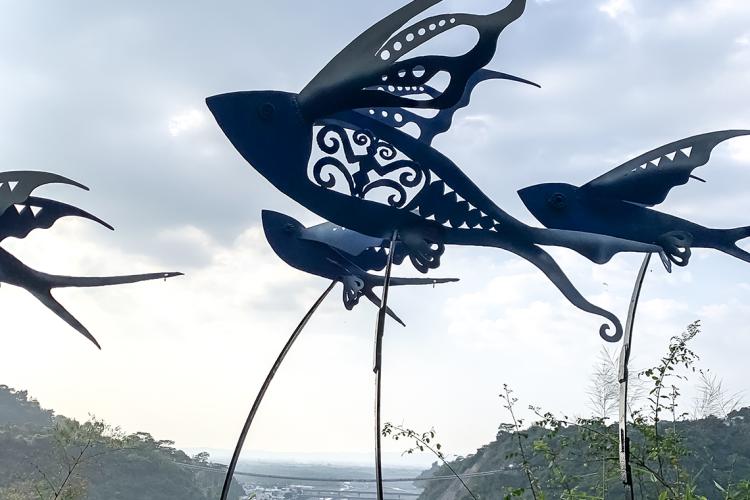
26飛躍族群 The Flying Ethnic Group
藝術家: 達比烏蘭˙古勒勒 /排灣族
Artist: Tapiwulan‧Kulele /Paiwan
2001
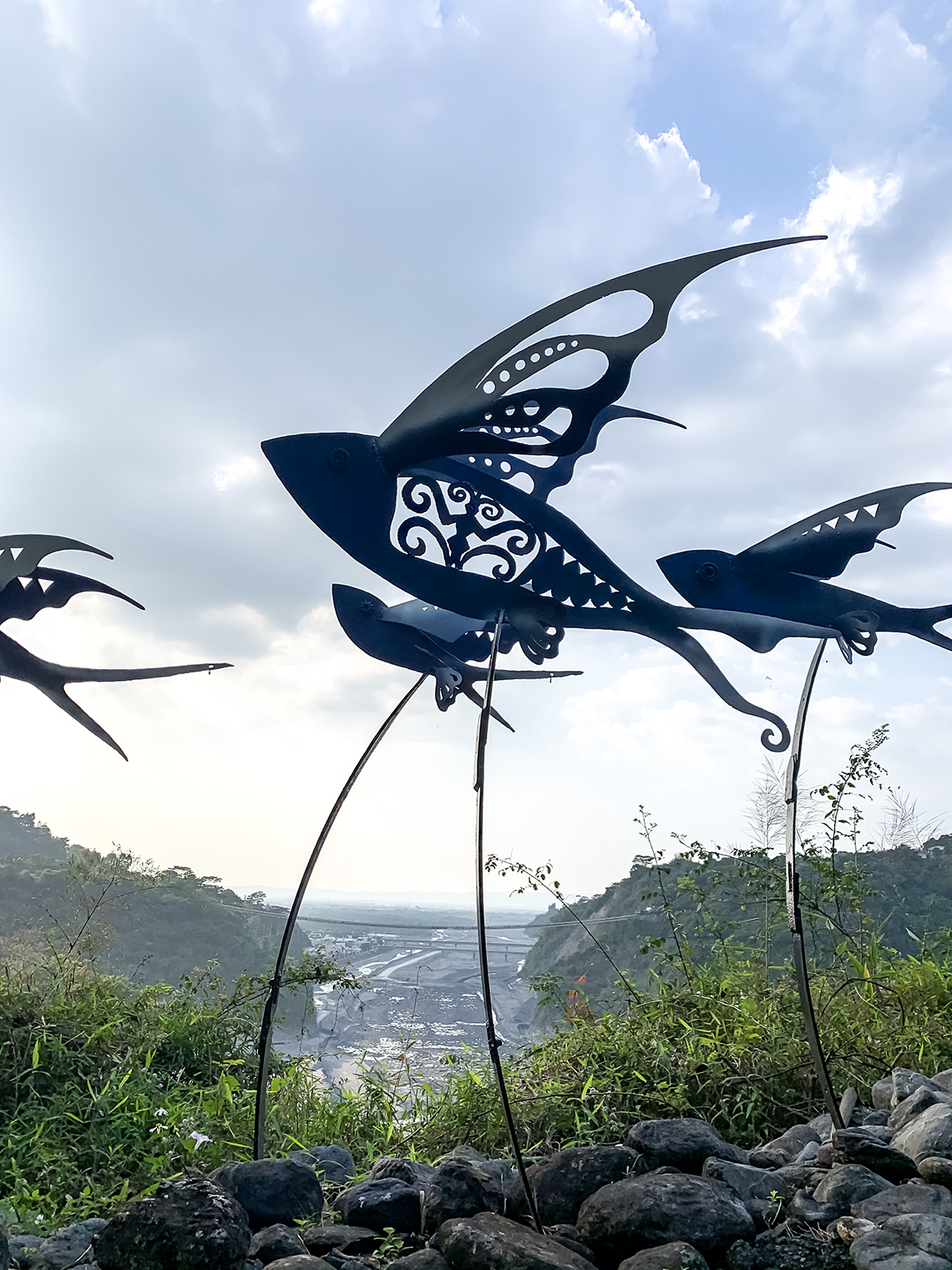
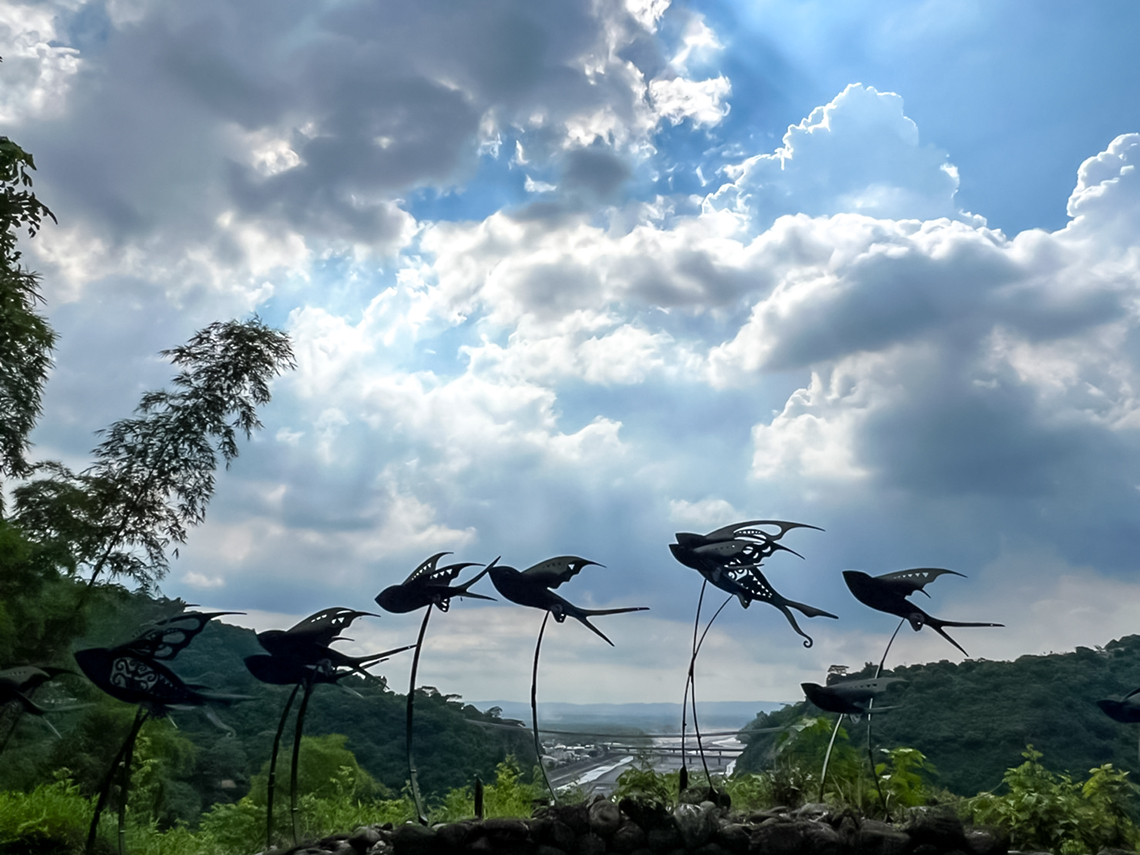
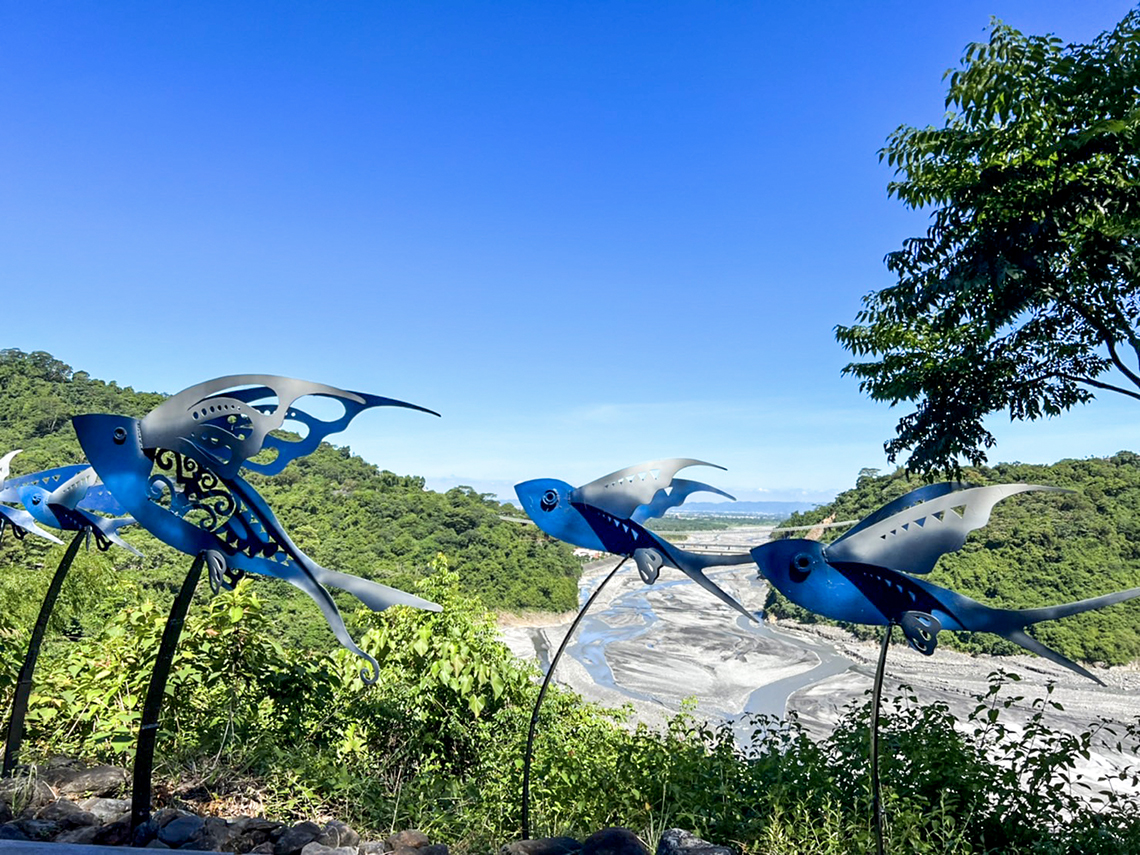
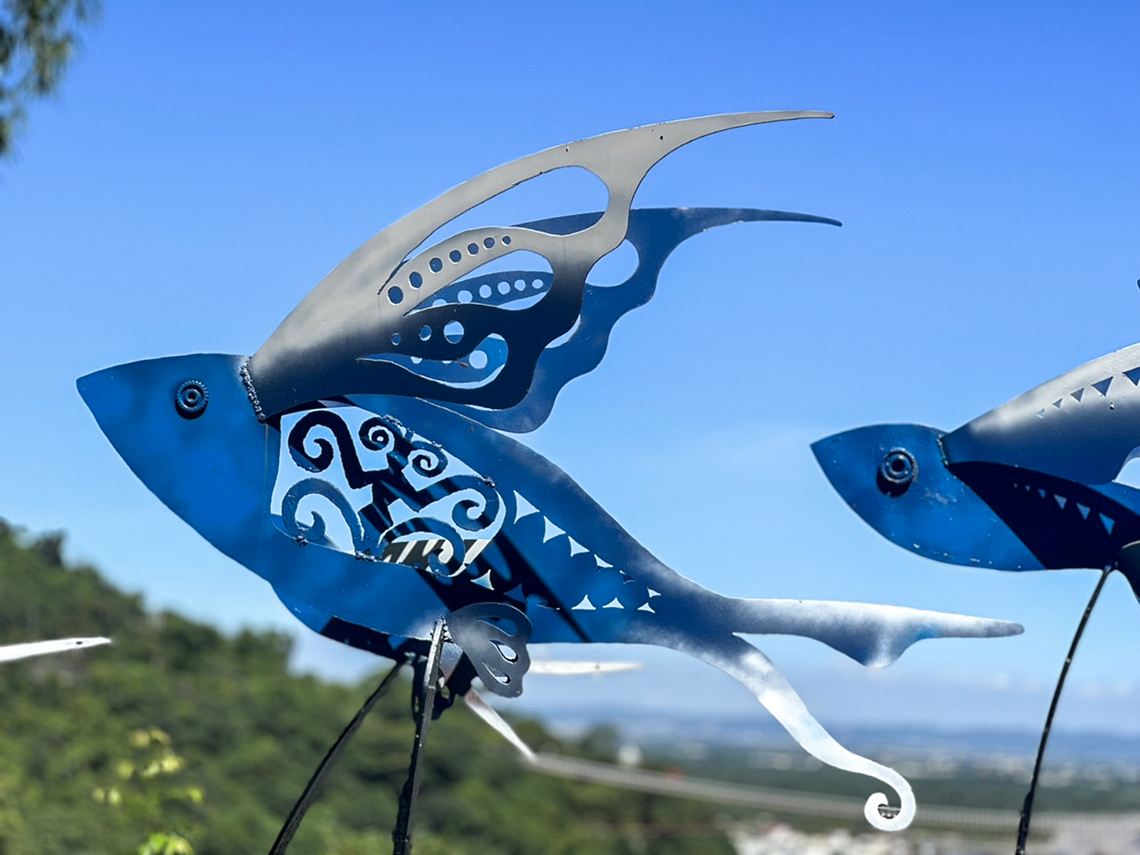
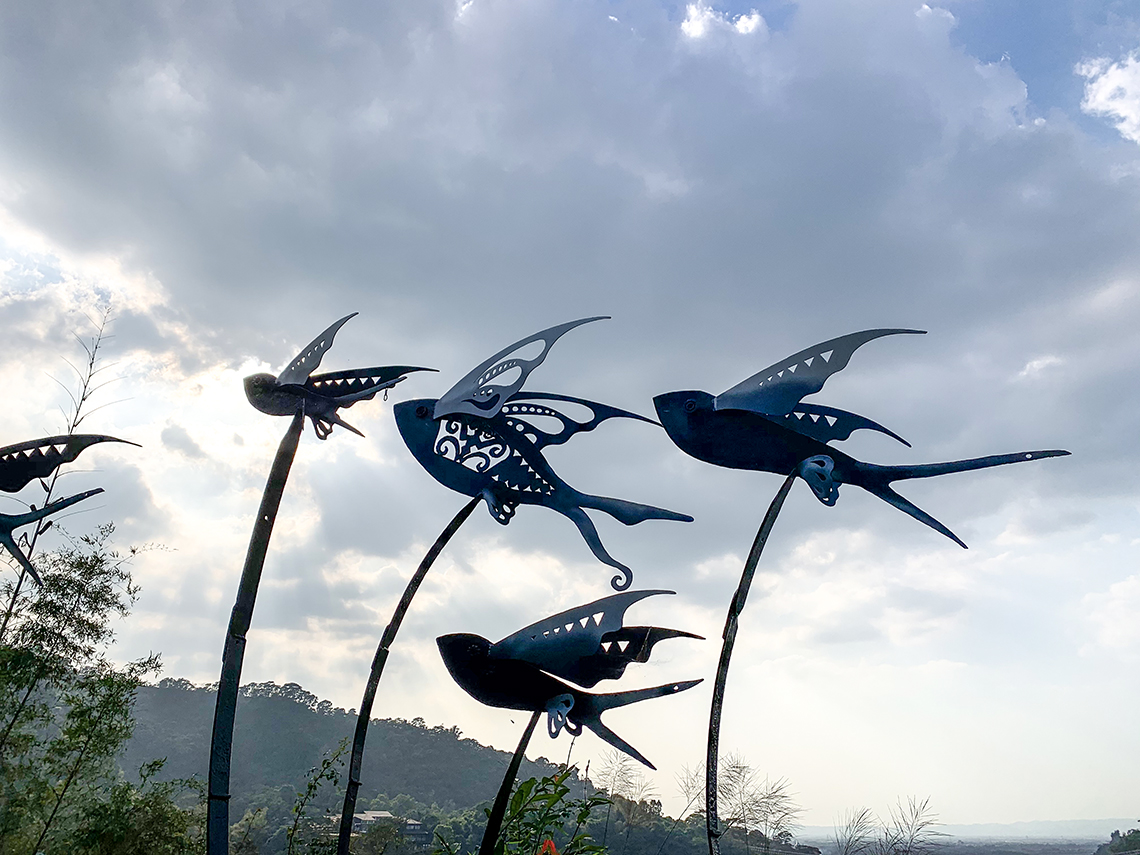
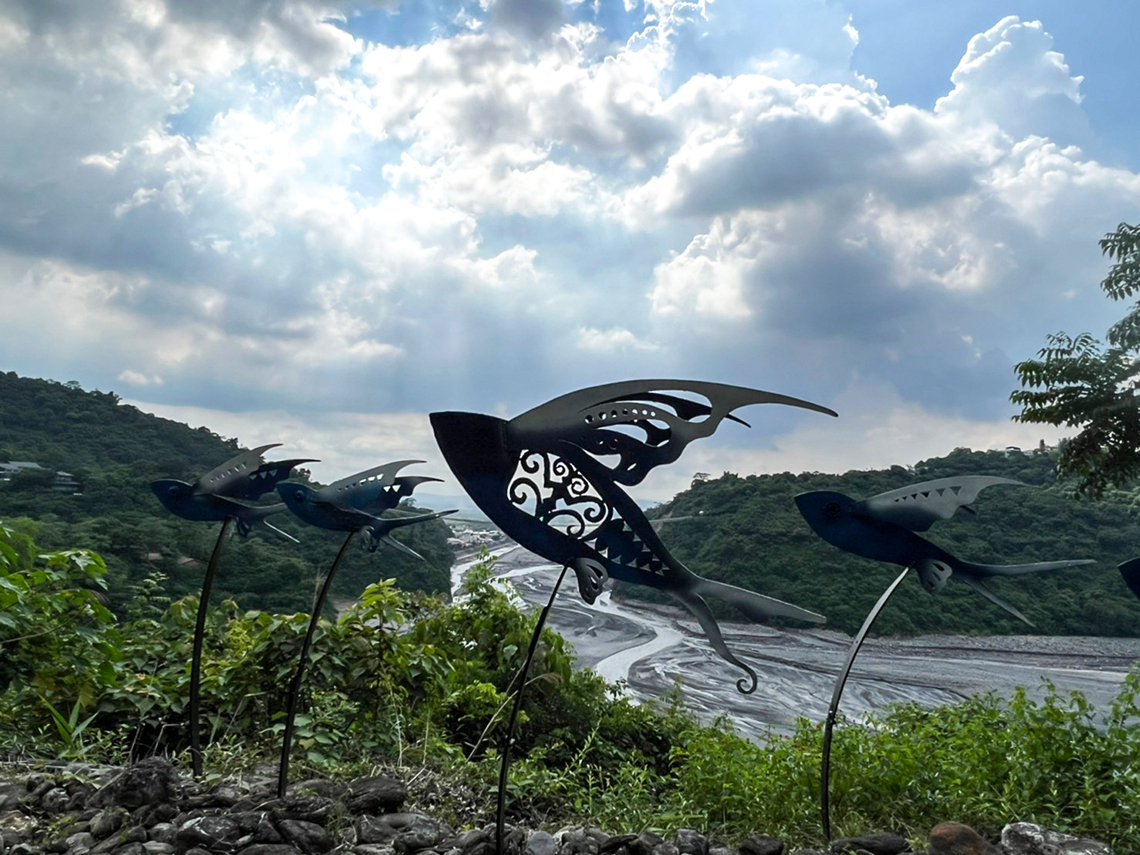
伴著河谷、山林與無比湛藍的天空,每每經過古勒勒於2001年創作的飛魚意象的作品時,總是會停繫腳步,一邊探究飛魚的魚群,一邊看著遠方的溪流,它總會帶給人們特殊的心情。
古勒勒憶起它創作❰飛躍族群❱之靈感,探起該作品坐落的空間,他表示,原住民族文化園區是原住民各族群所匯集的地方,所以希望在這看見不同族群之美,而一直想要前往蘭嶼認識達悟文化的他,正好可以藉著創作把對於蘭嶼的想像形塑出來。
Accompanied by river valleys, mountain forests and the incomparably blue sky, whenever passing by Kulele’s works of flying fish it is hard not to stop and be amazed by this imagery of flying fishes and the river view in the distance.
Kulele recalled the inspiration for his creation ❰ The Flying Ethnic Group❱ completed in 2001, and said that the indigenous cultural park is a place where various ethnic groups of indigenous peoples gather. So, he hopes to see the beauty of these different ethnic groups here. Also, since he has always wanted to go to Lanyu to learn about the Yami (Tao) culture, he shaped his imagination of Lanyu through his creation.
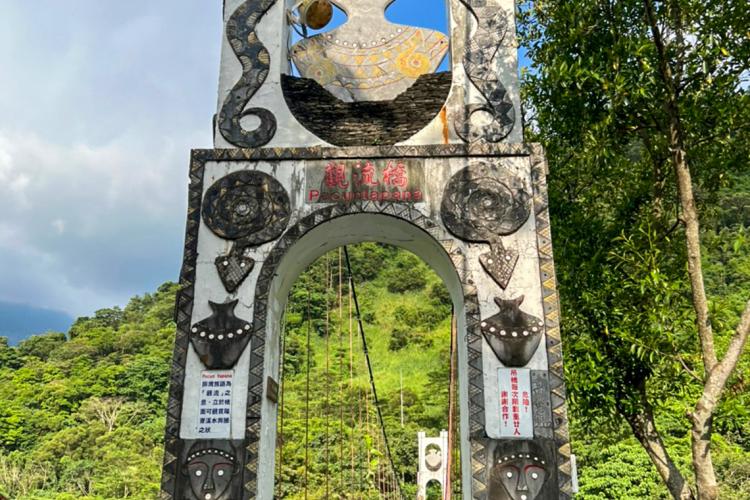
24觀流橋 River View Suspension Bridge
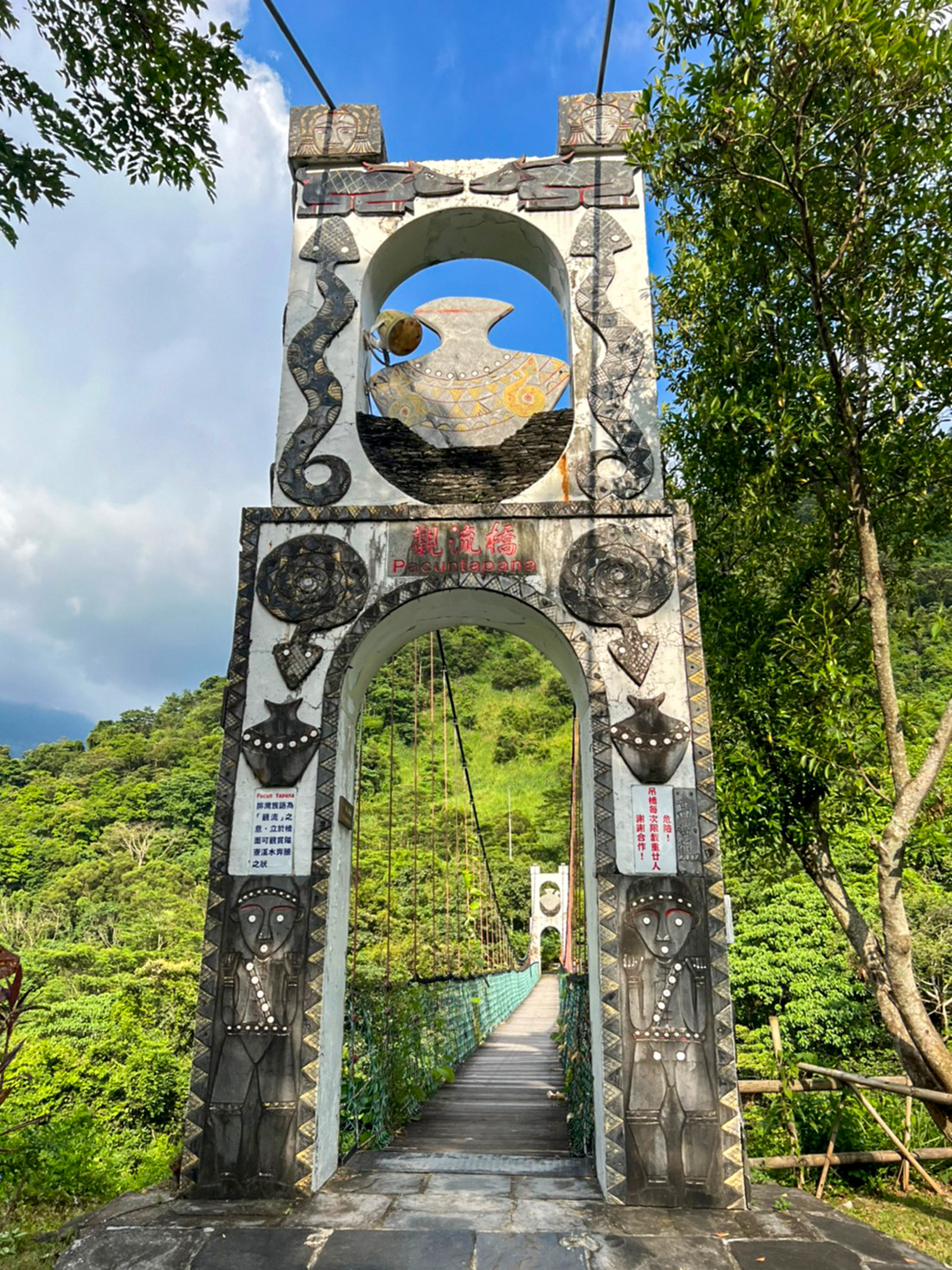
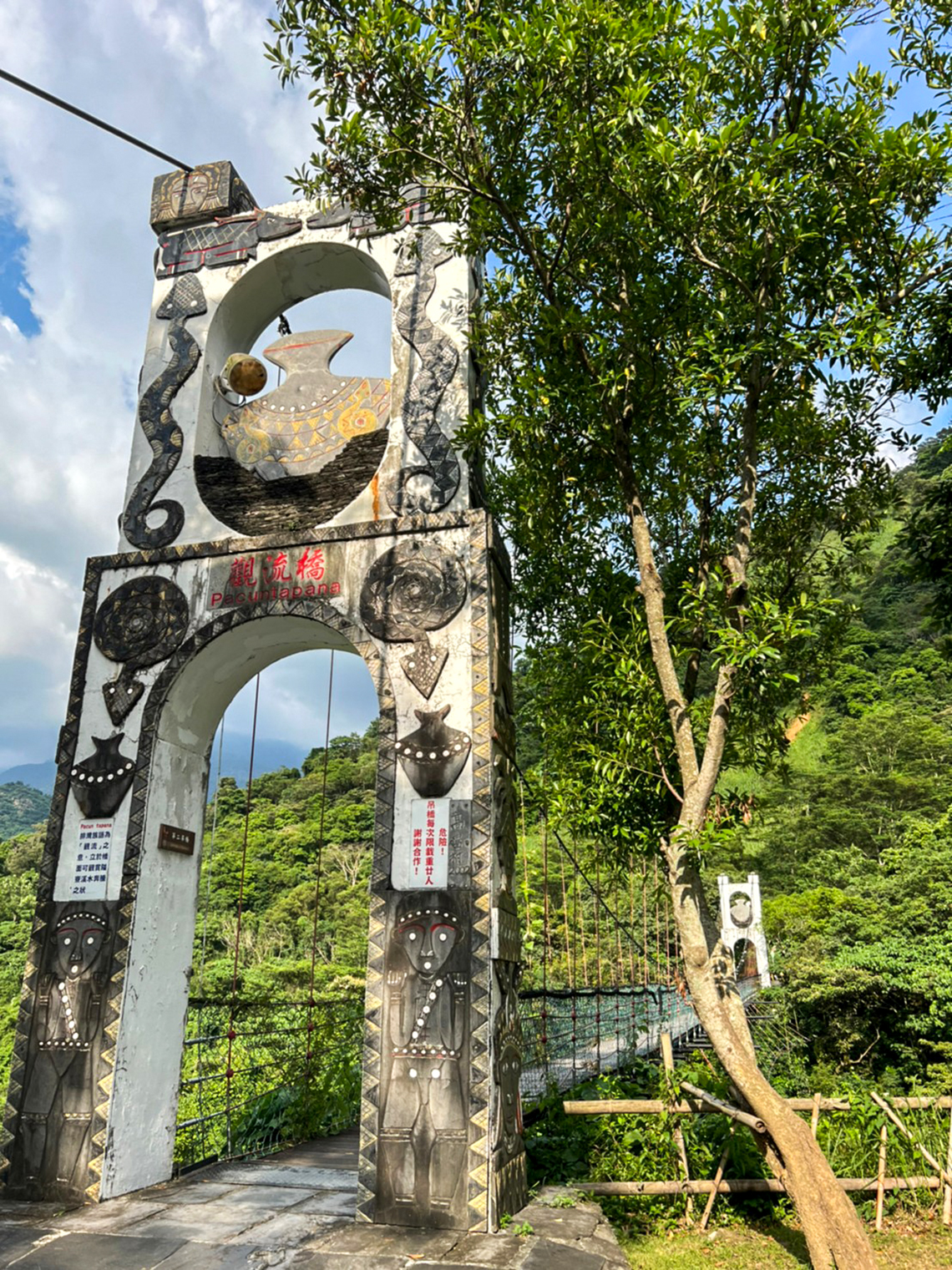
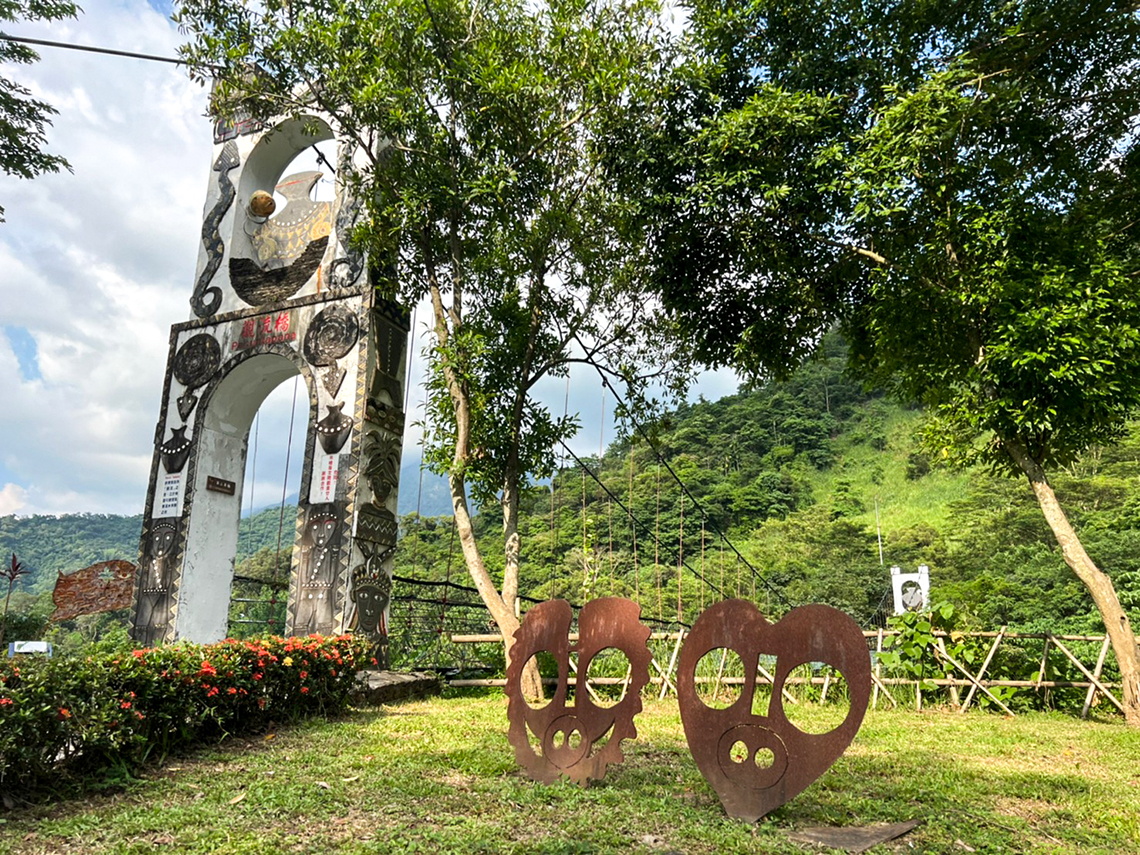
排灣族語「Pacun ta pana 」,意思是「觀流」,立於橋面吊橋可眺望隘寮溪水奔騰之狀,也可以欣賞橋面兩側的溪谷之美。吊橋在早期是部落與部落間的連結,穿越富有排灣族圖騰的象徵設計的觀流橋,彷彿回到過去的生活情境。
"Pacun ta pana" means "viewing the stream" in the Paiwan language. When standing on the suspension bridge, you can see the rushing water of the Aliao River and the beauty of the valleys on both sides of the bridge. In the early days, suspension bridges were the link between tribes. Crossing the River View Suspension Bridge, which is decorated in symbolic Paiwan totems, is like walking on the path of the past.
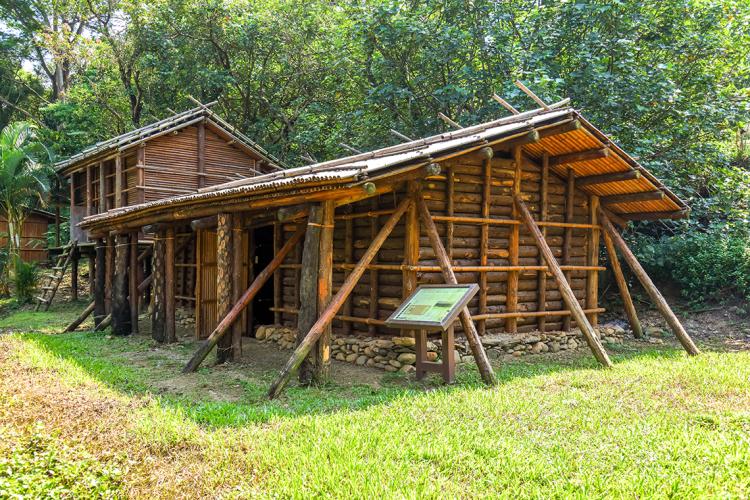
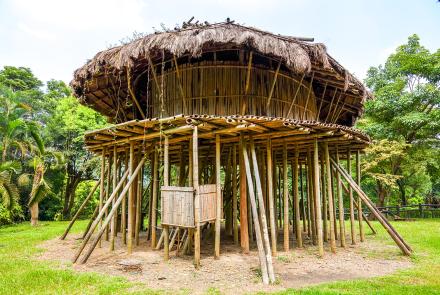
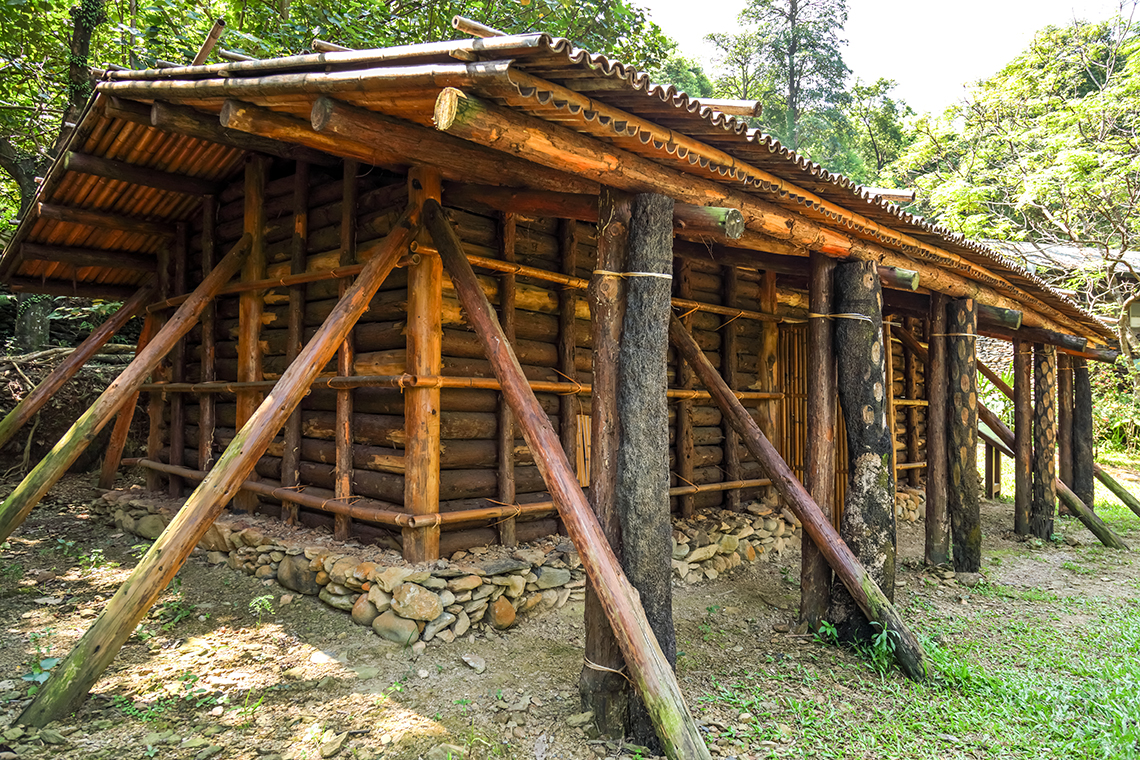
21太魯閣族傳統建築 Traditional Truku Architecture
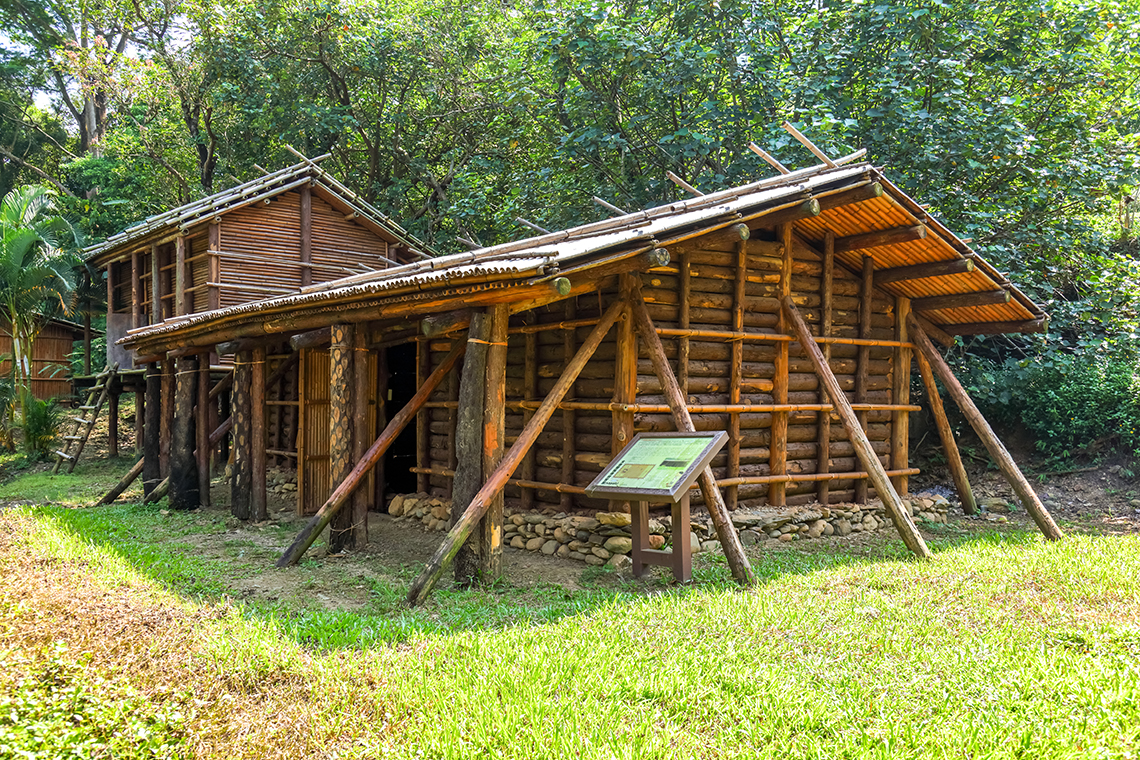
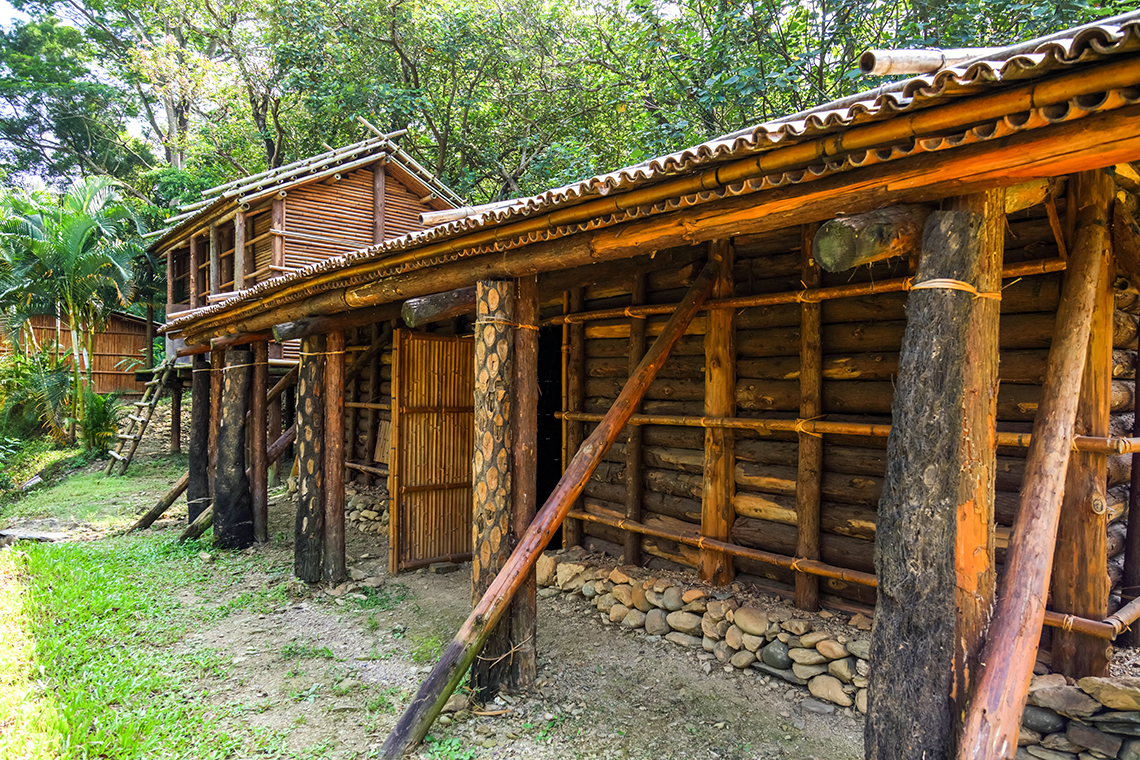
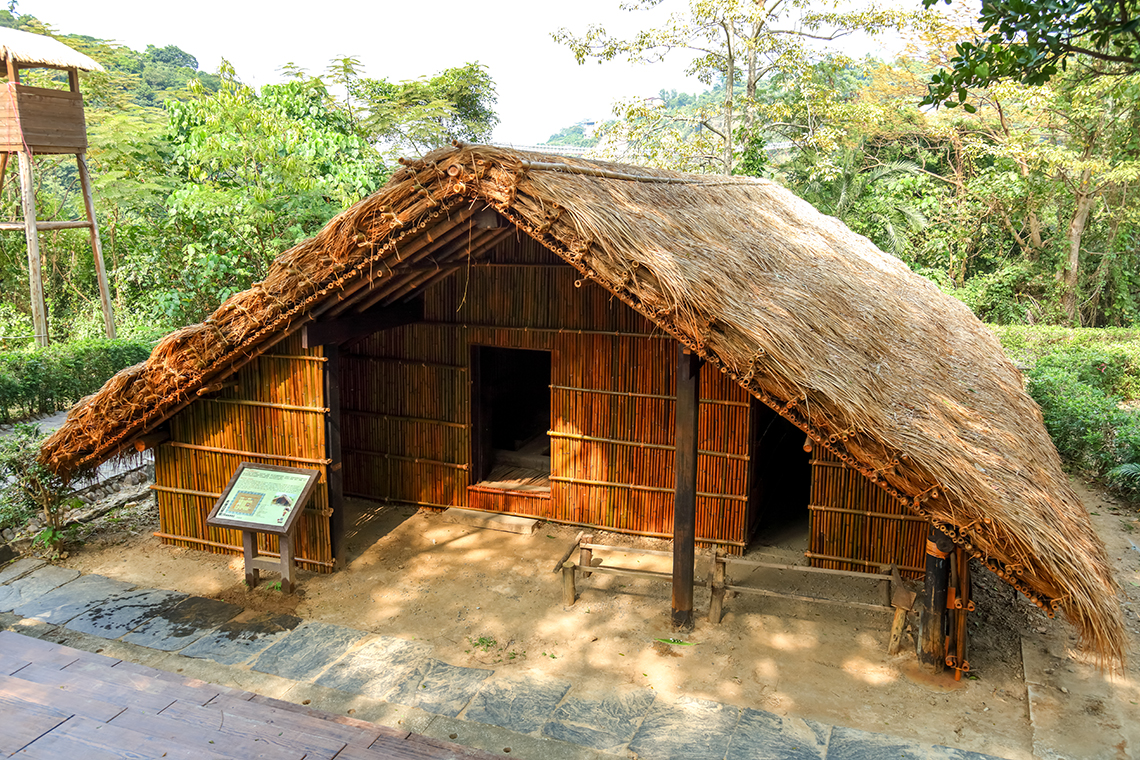
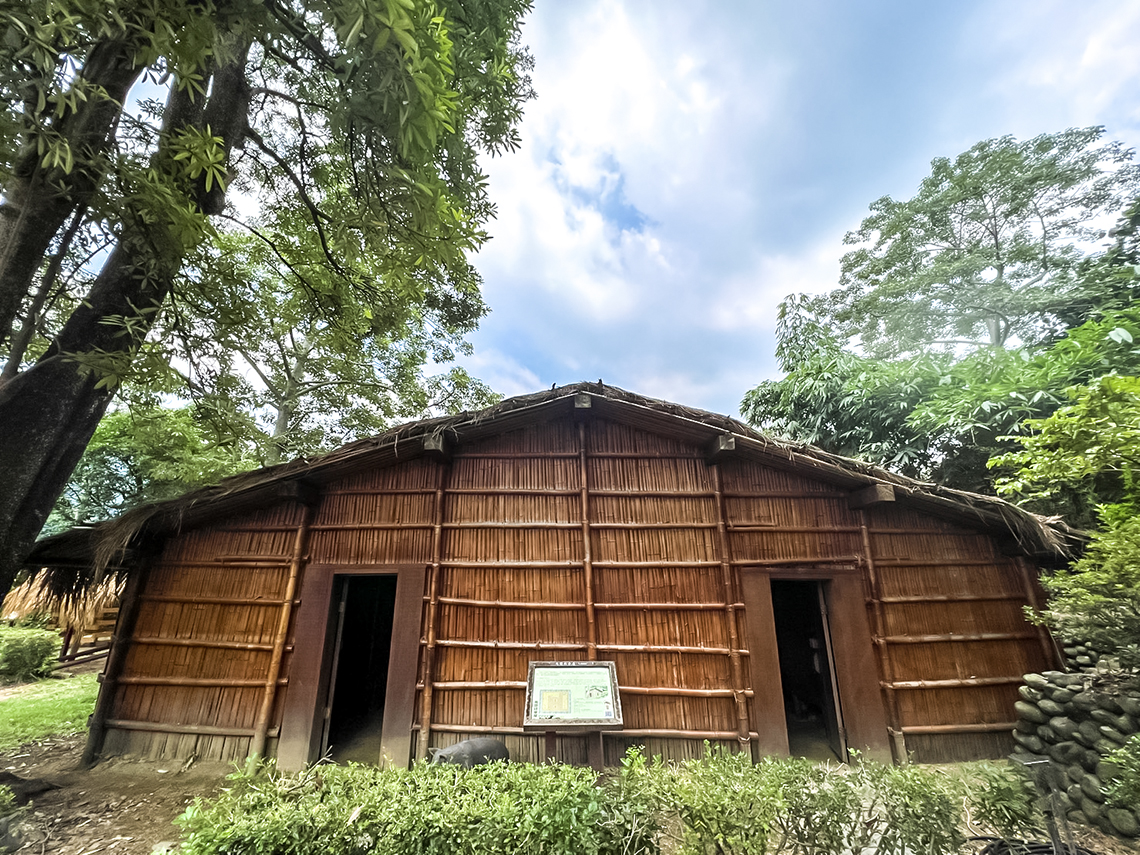
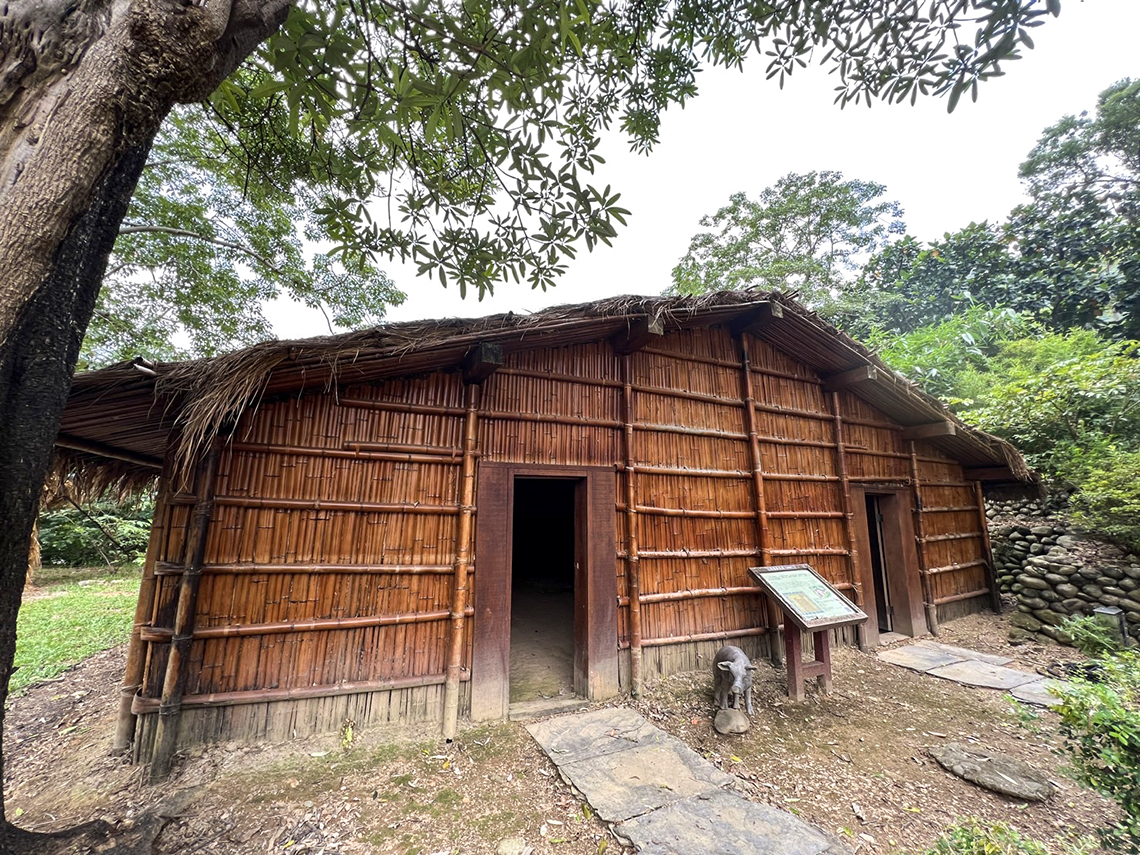
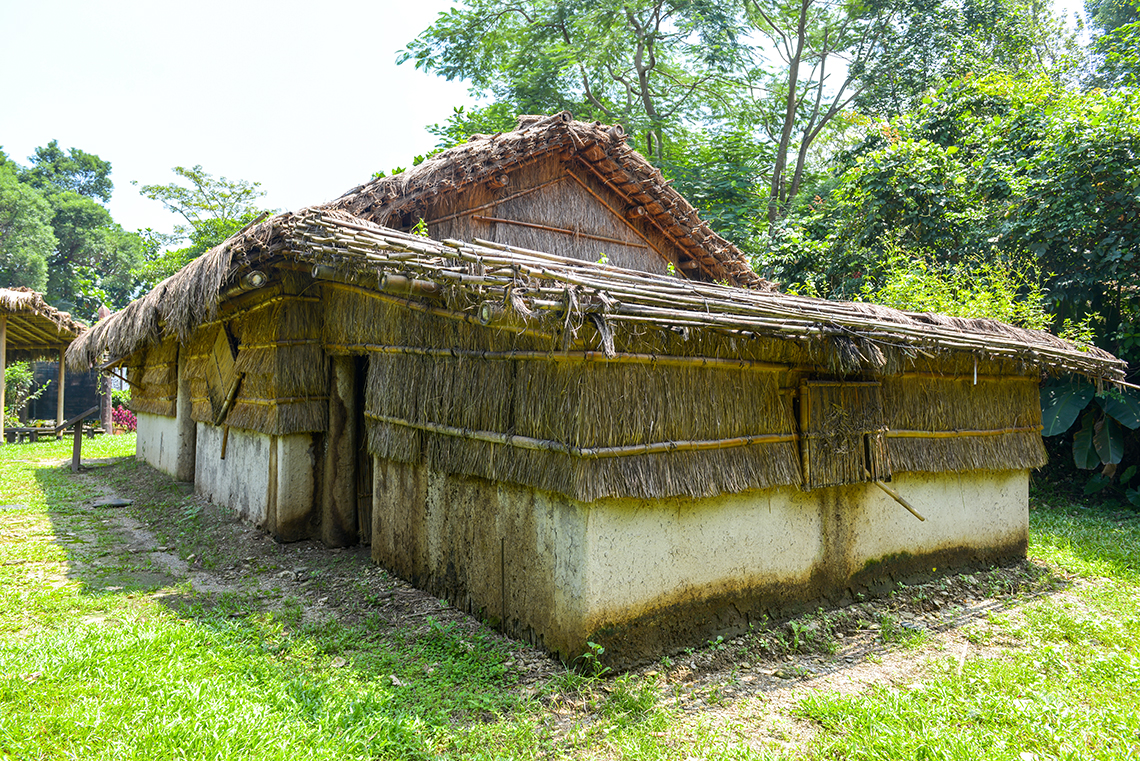
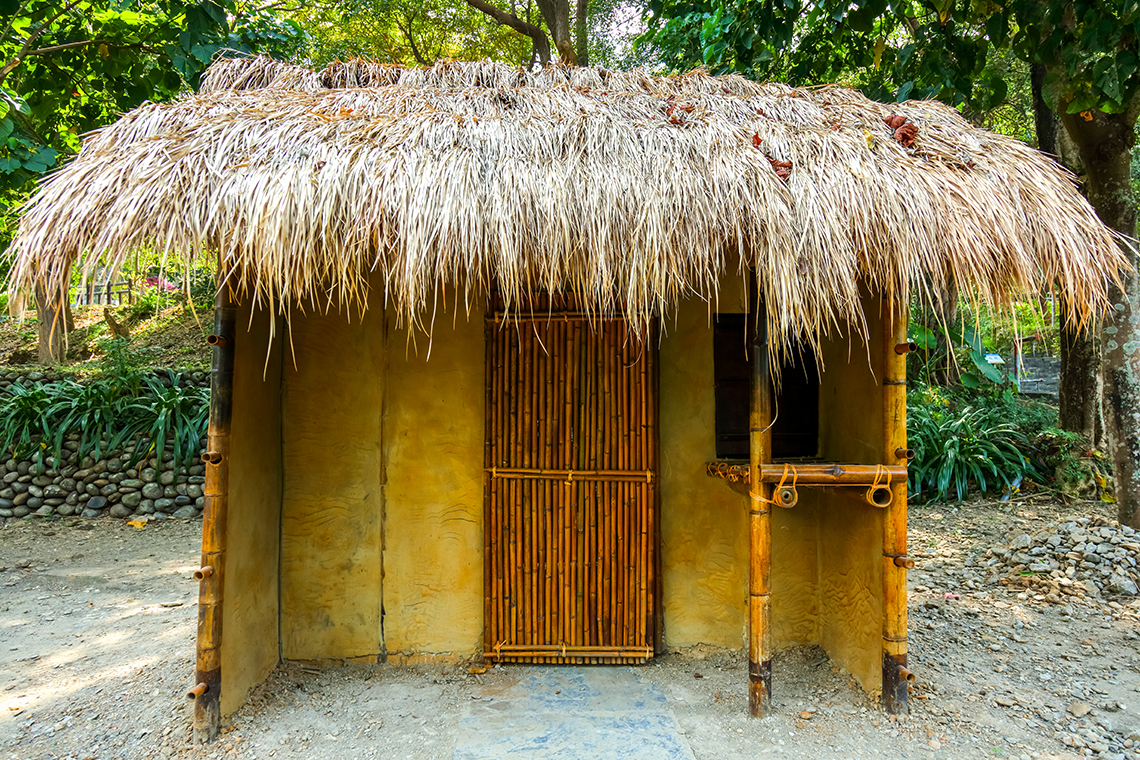
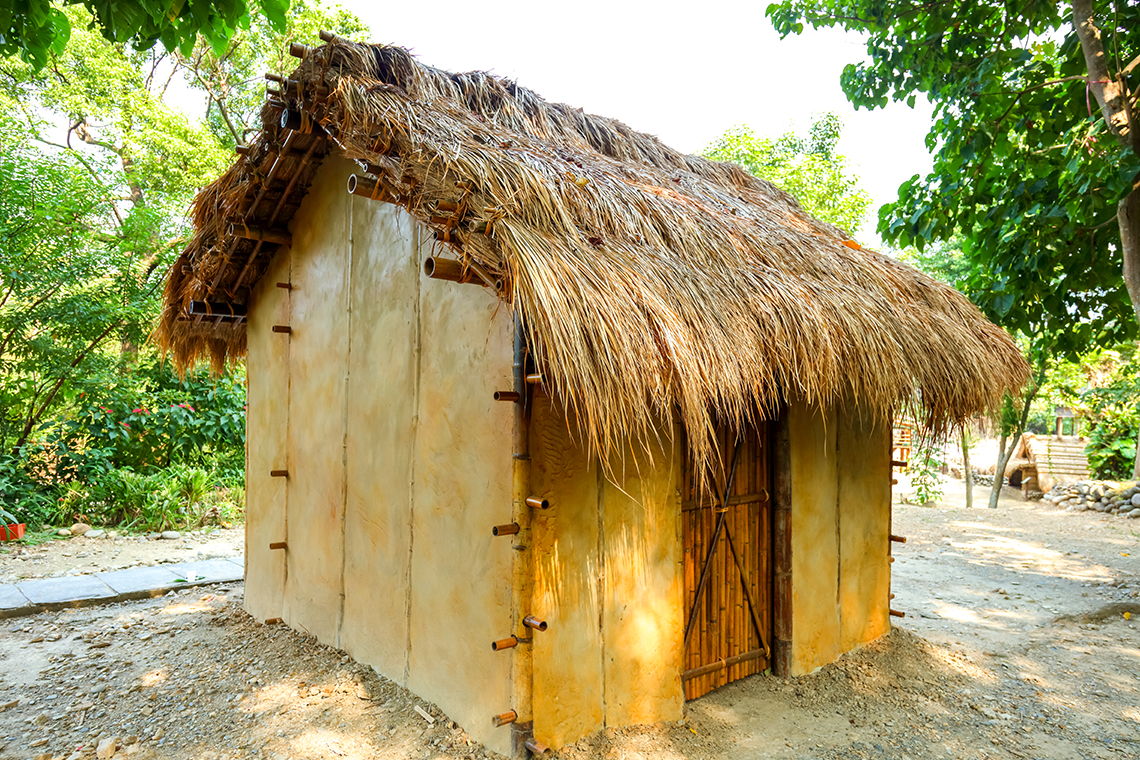
太魯閣族原劃歸泰雅族中的賽德克亞群,2004年通過成為臺灣第十二個原住民族。其發祥地為中央山脈白石山。約三、四百年前,因人口成長、獵場不足,而跨越中央山脈遷徙至花蓮,主要分佈於秀林鄉、萬榮鄉、卓溪鄉的太魯閣溪、立霧溪、木瓜溪等河谷兩岸。因與泰雅族長久的淵源,兩族住家有相似之處,並於遷移之後發展出獨有特色。
如上所述,太魯閣族原居住於臺灣中部濁水溪上游的高山地帶,後遷徙至臺灣東部,因此,其建築略可分類為中部住家與遷移後的東部住家。
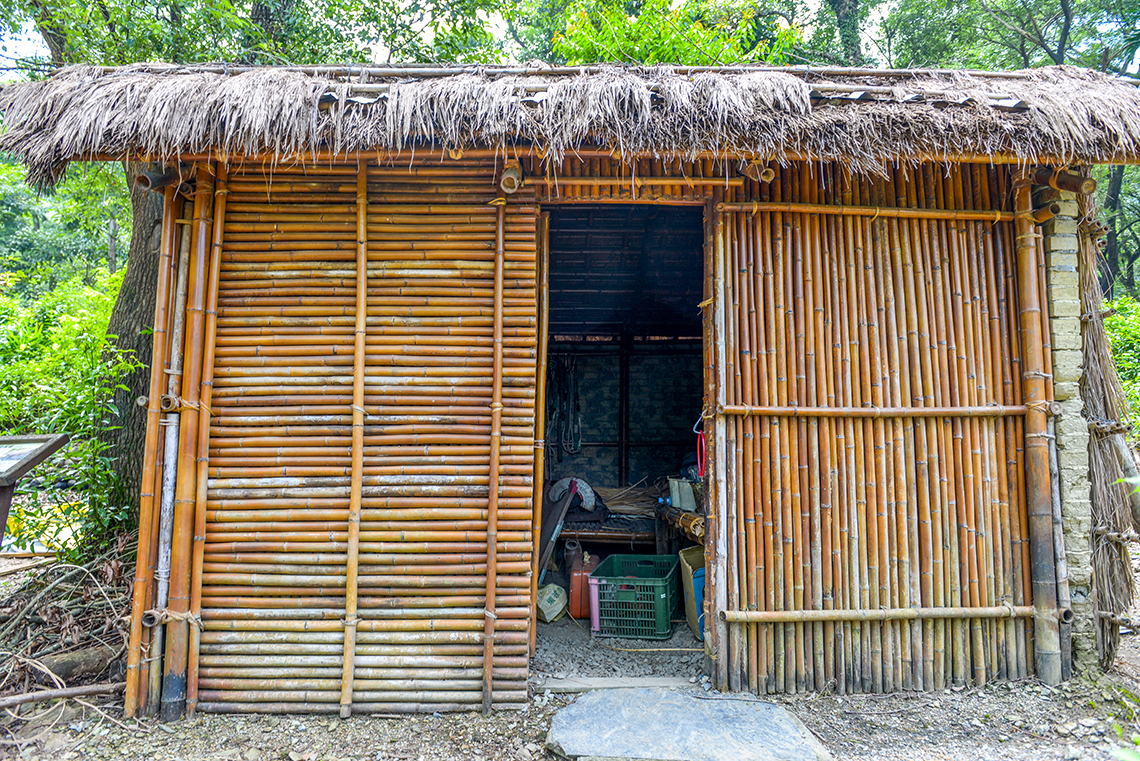
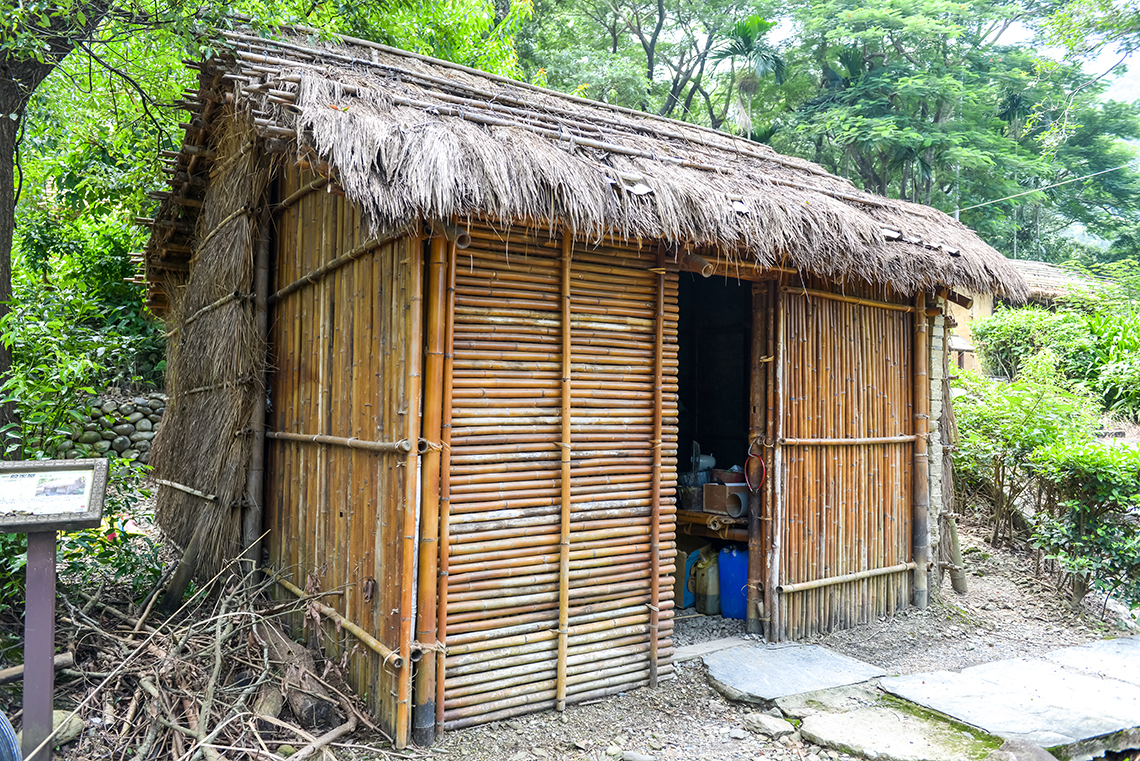
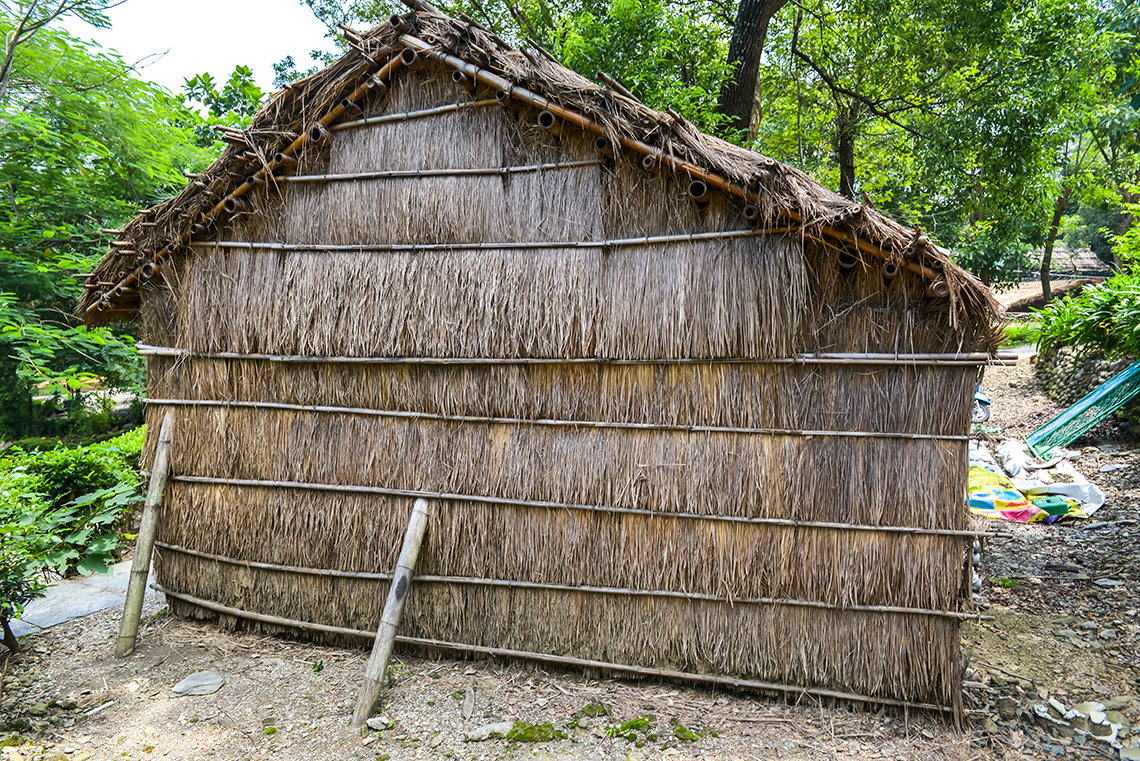
根據泰雅族與賽德克族的資料,推測太魯閣族家屋建有附屬建築,包含穀倉、豬舍與雞舍。
The Truku people were originally classified as the Sediq subgroup of the Atayal people. In 2004, they became the 12th officially recognised indigenous group in Taiwan. Its origin was from Mount Baishi in the central mountain range. About three or four hundred years ago, due to population growth and lack of hunting grounds, they migrated across the mountain ranges to Hualien, and distributed mainly in Xiulin Township, Wanrong Township, and on river valleys of Taroko River, Liwu River and Mugua River in Zhuoxi Township. According to the data of the Atayal and Sediq people, it is speculated that the Truku houses had ancillary buildings, including barns, pigsties and chicken coops.
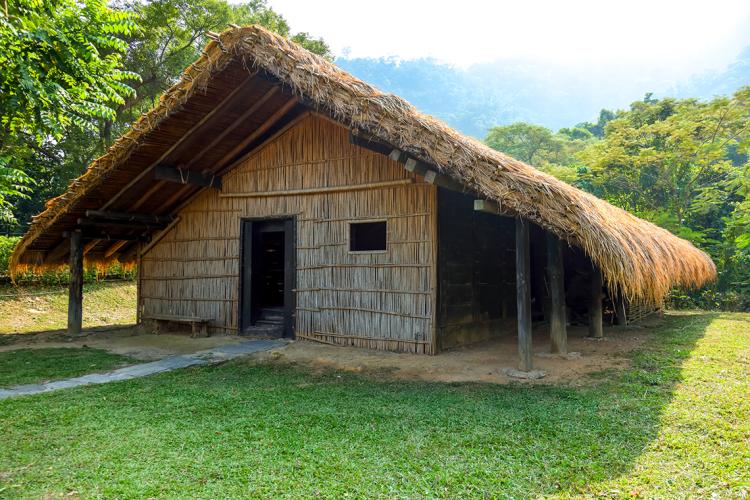
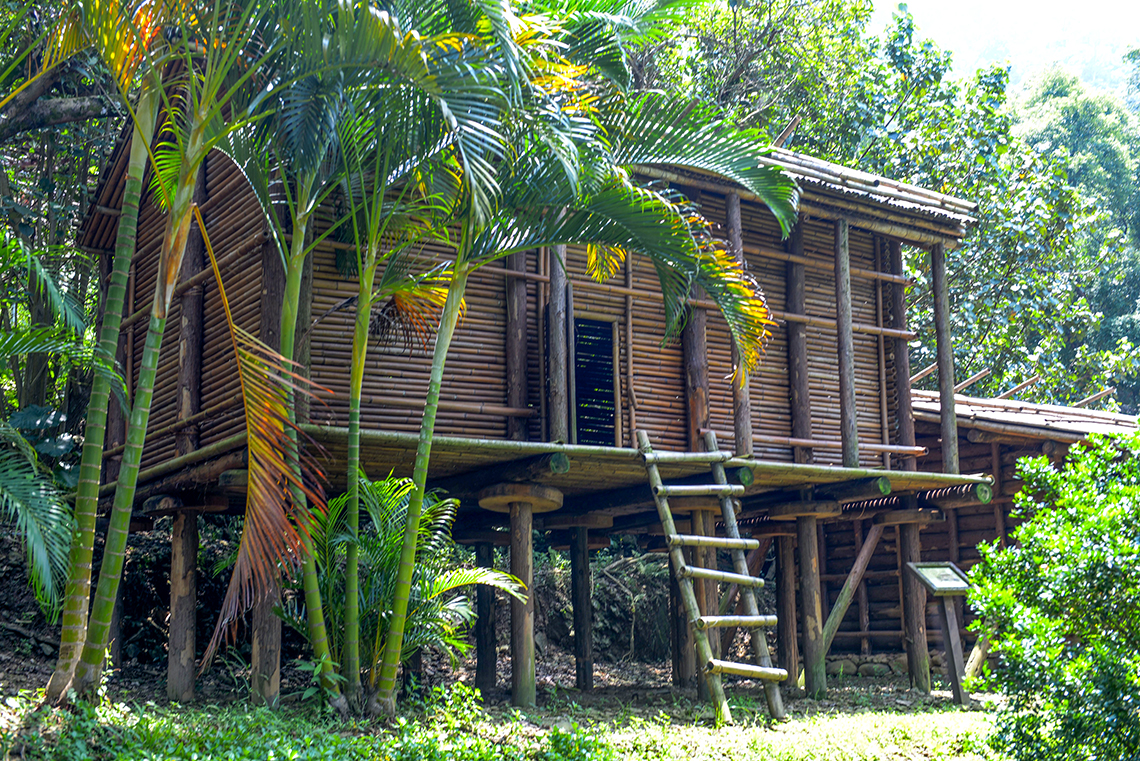
17阿美族傳統建築 Traditional Amis Architecture
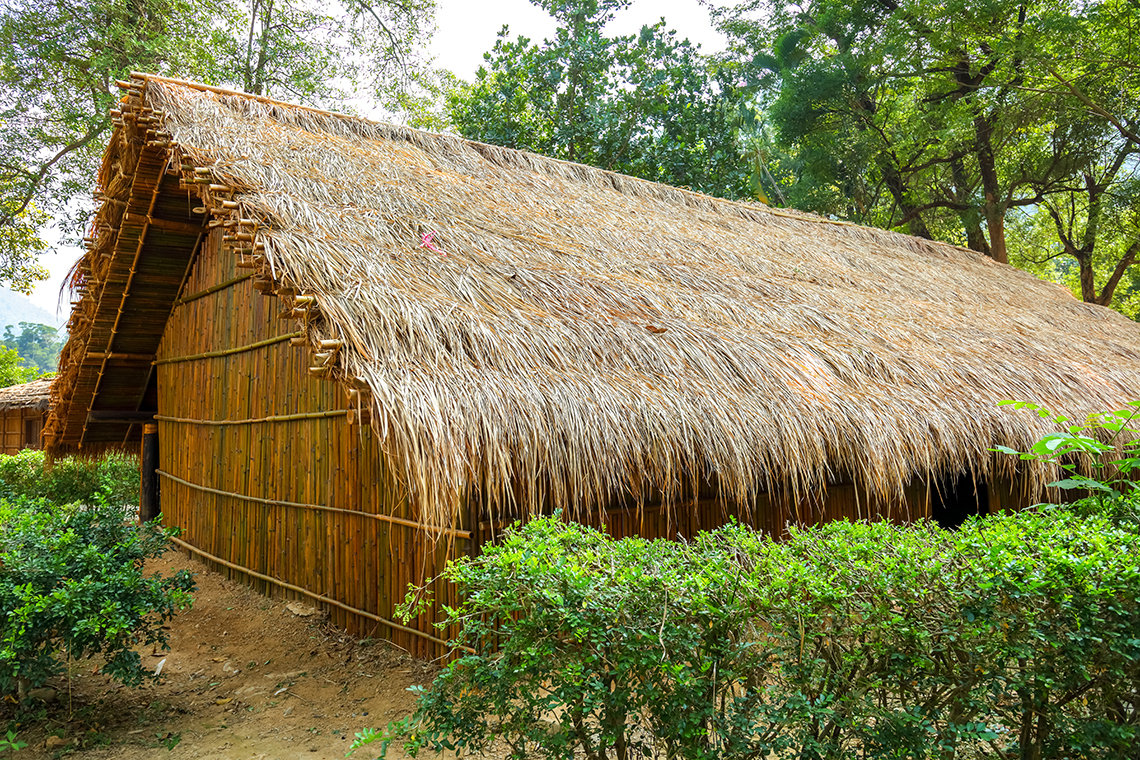
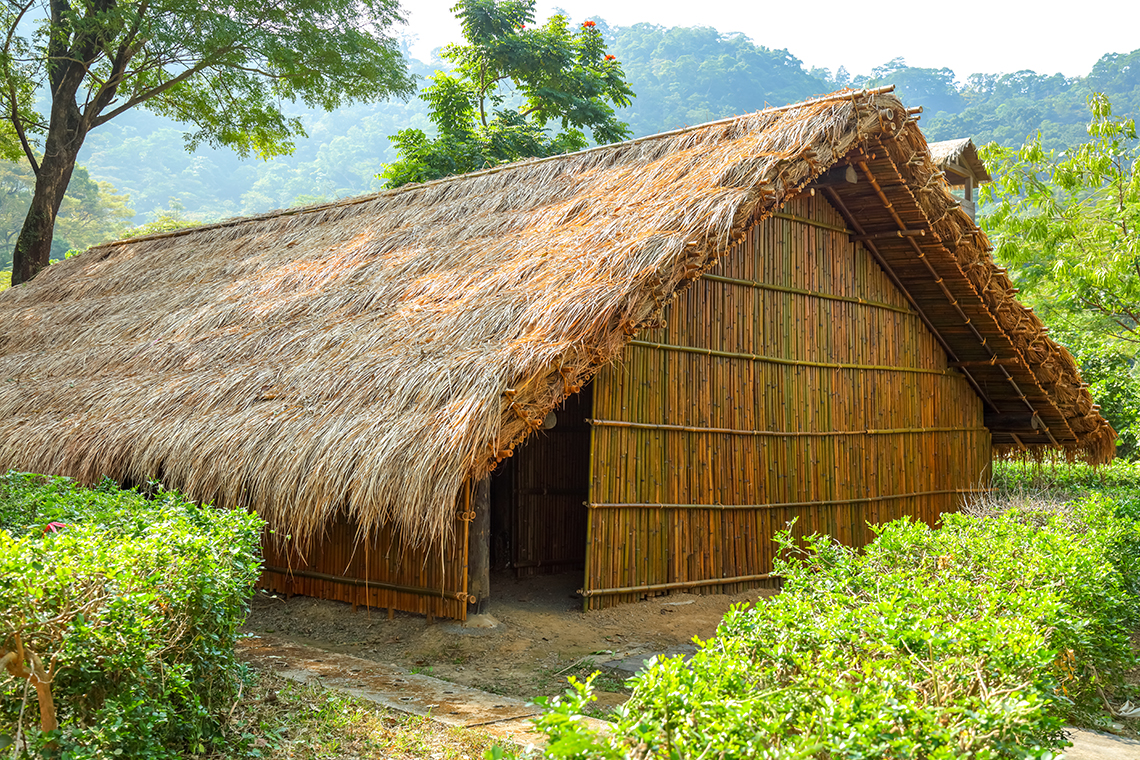
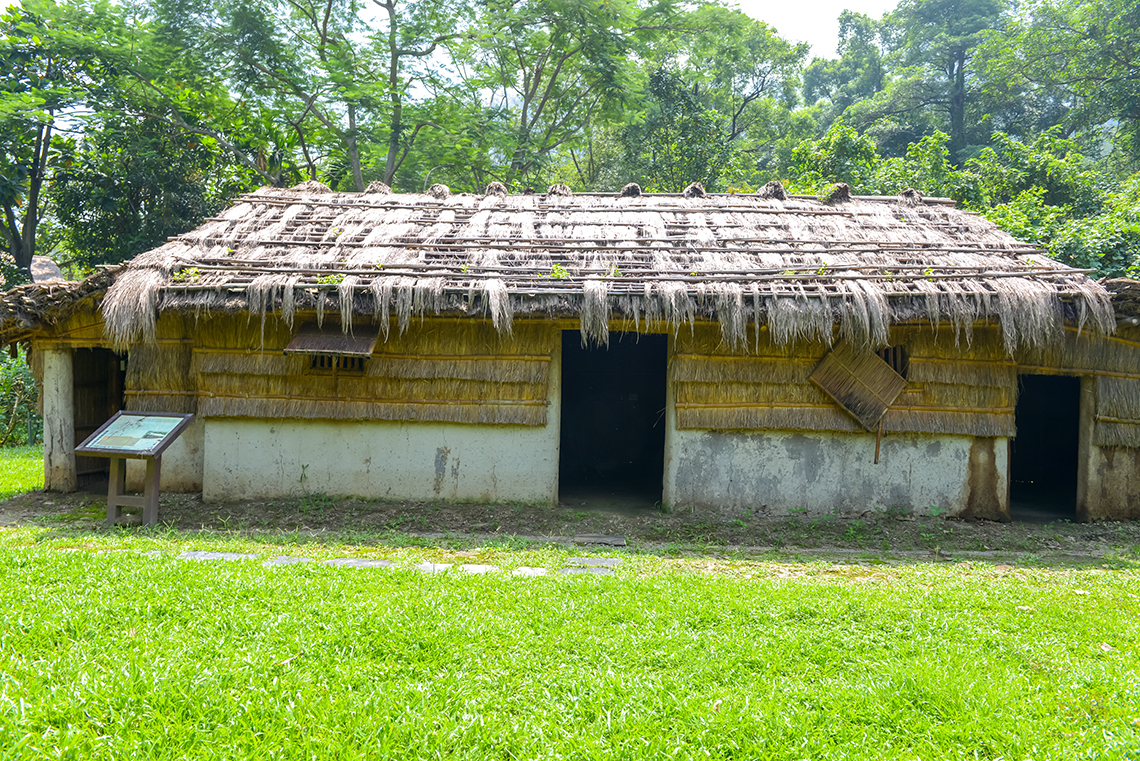
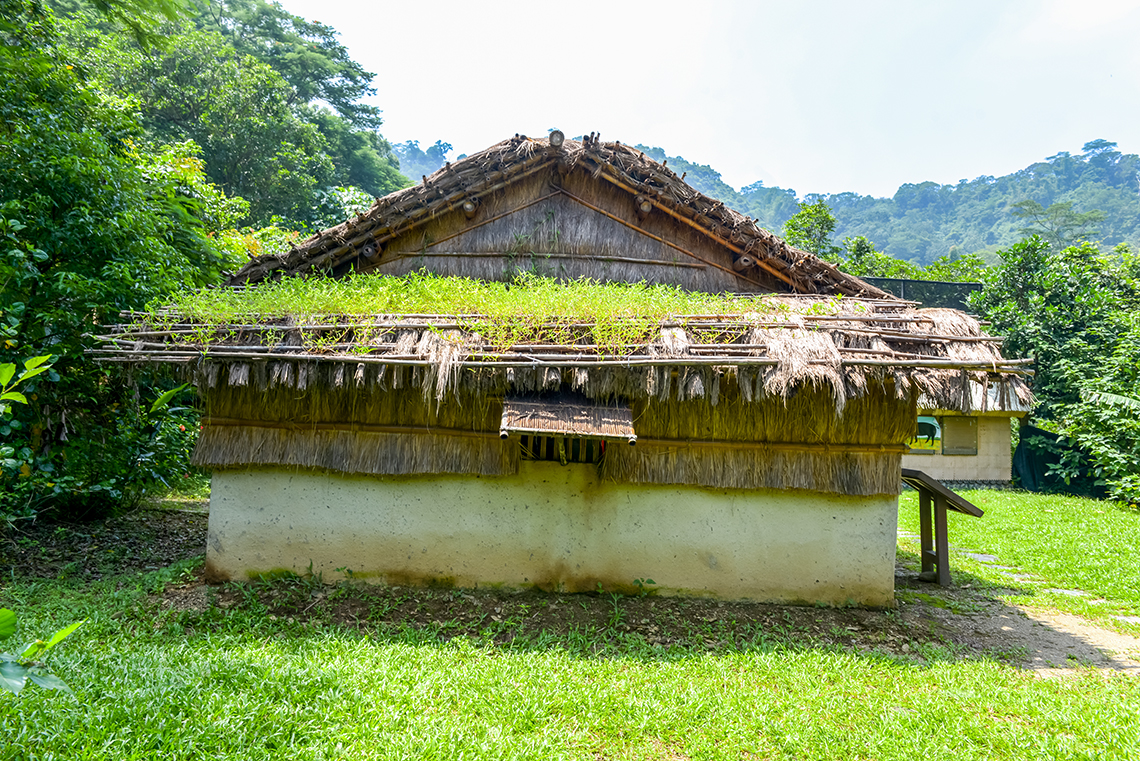
與其他原住民族相較,阿美族人口較多,聚落規模較大。為維護全體部落居民的安危,部落周圍以竹製圍籬防禦,幾乎所有部落都會設置瞭望臺,然此兩類部落景觀己不再。
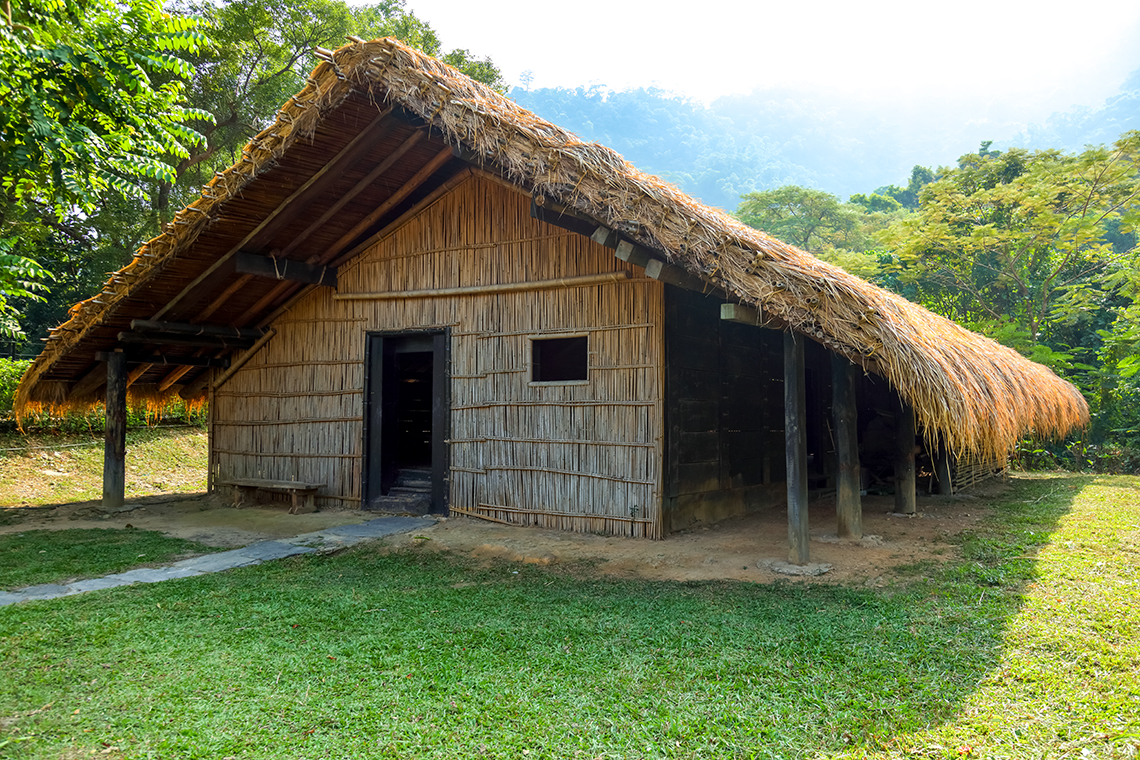
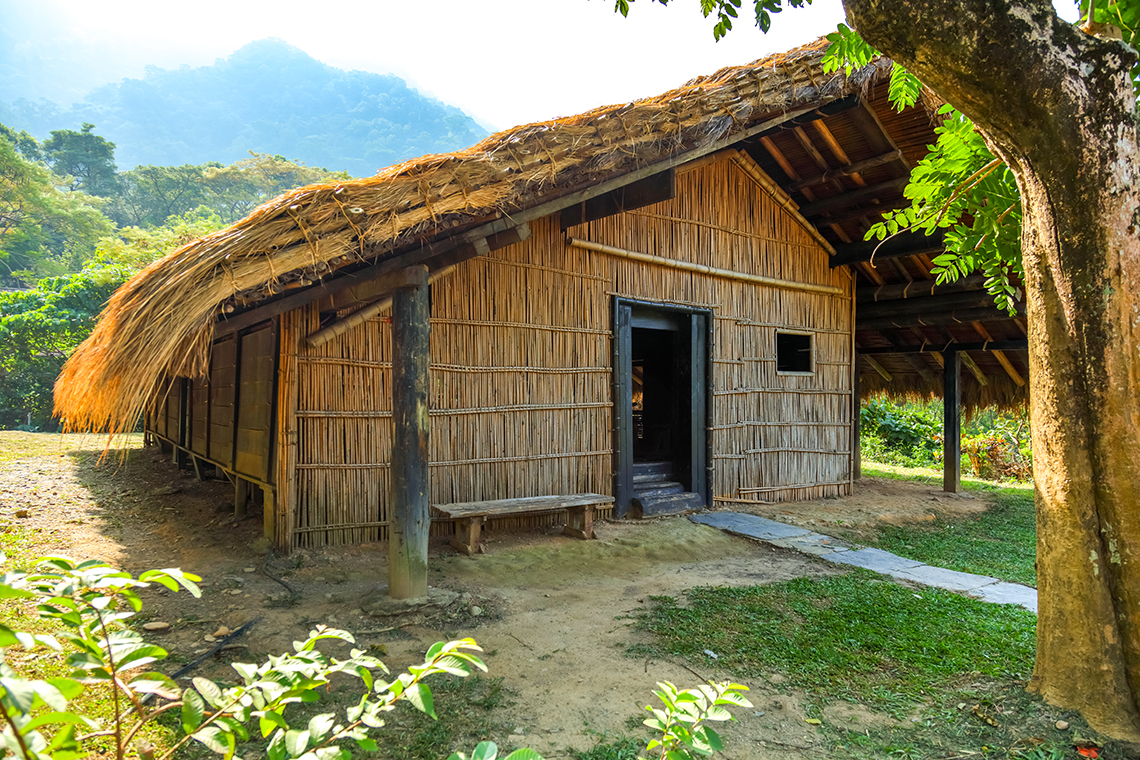
過去一般家屋以住屋、畜舍、穀倉等組成,房屋形式因分佈地區而異。除家屋外,集會所佔有重要地位。 阿美族傳統家屋以長方型木材為樑柱,竹或木板為壁面,屋頂覆以茅草,主要有下列二種型態:
1北部的單室正門式,如太巴朗或大港口的住家。
2.南部的複室側門式,如馬蘭社住家。
Compared with other indigenous peoples, the Amis have a larger population and hence, a larger settlement. In order to maintain the safety of all residents, bamboo fences are erected for the defense around the tribe, and almost all tribes have watchtowers. Today, such scenery is no longer available.
In the past, a residence consisted of a house, shed, barn and so on. In addition to the home, the assembly hall plays the most important role.The form of houses varied according to the distribution area. A traditional Amis family house is made of rectangular wood as beams and columns, bamboo or wooden boards as walls, and the roof is covered with thatch. There are two main types of houses:
1. North Taiwan: Open space with one entrance, such as the houses of Tiberias or Grand Harbour.
2. South Taiwan: House with indoor partitions and side door, such as the houses of the Malan Society.
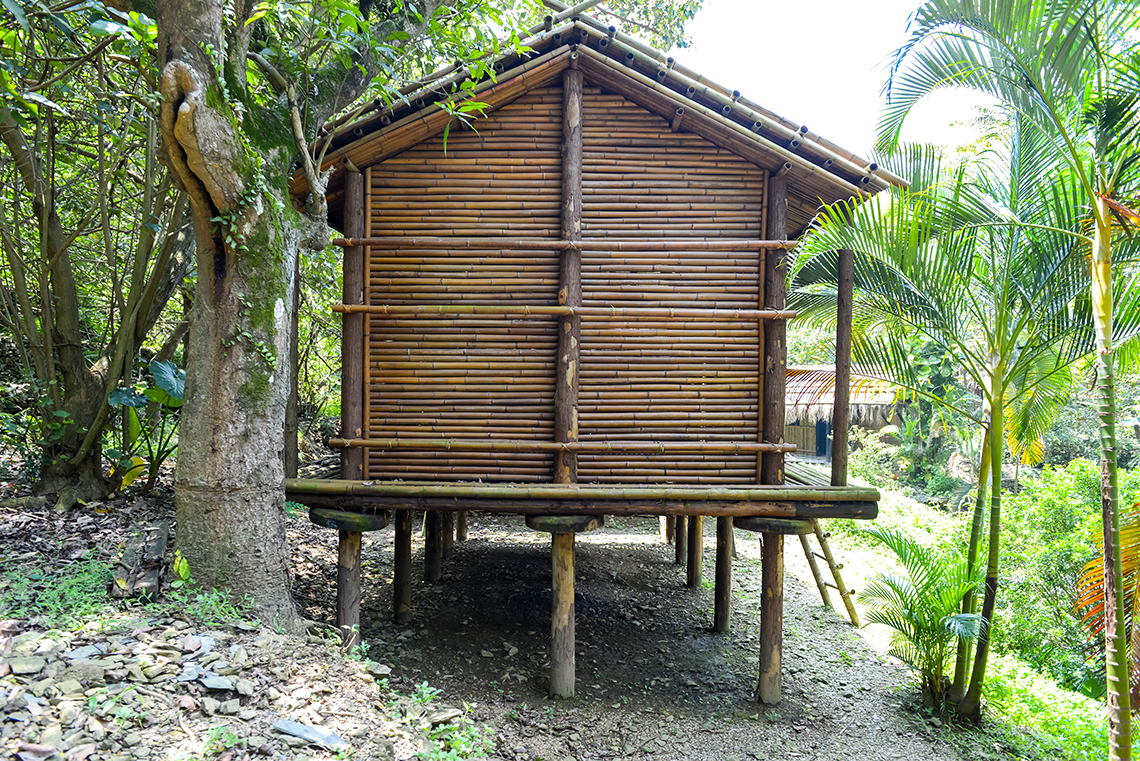
16噶瑪蘭族傳統建築 Traditional Kavalan Architecture
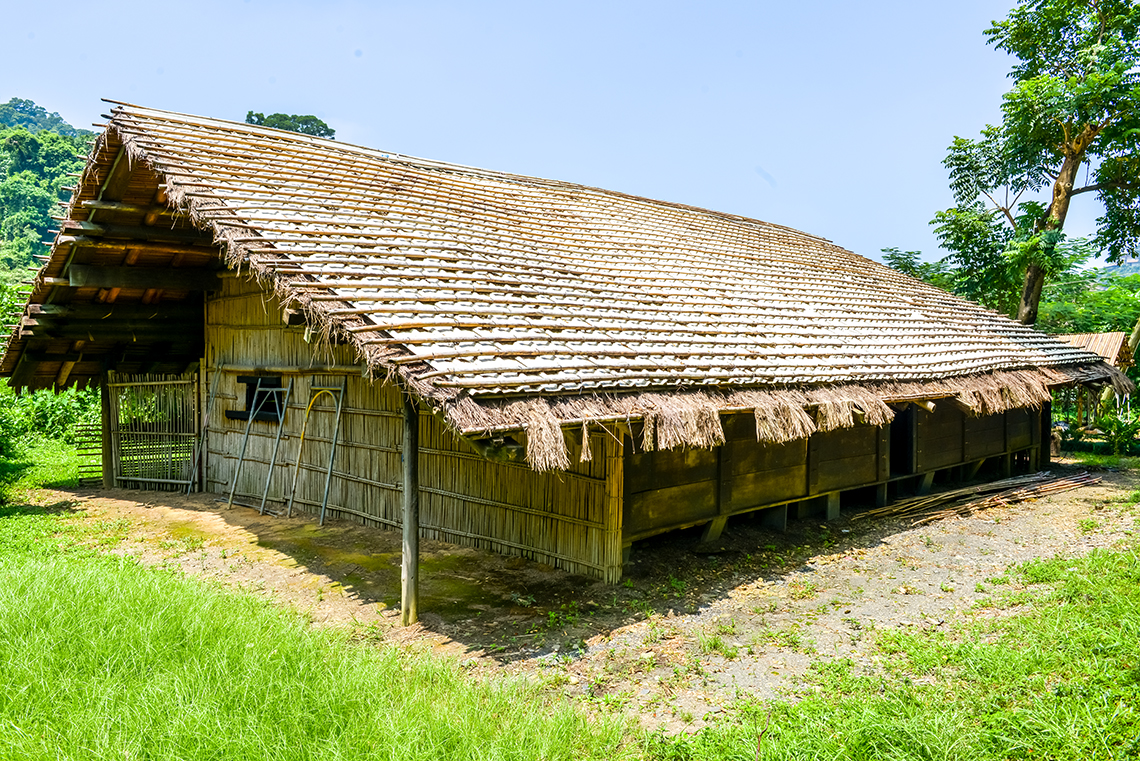
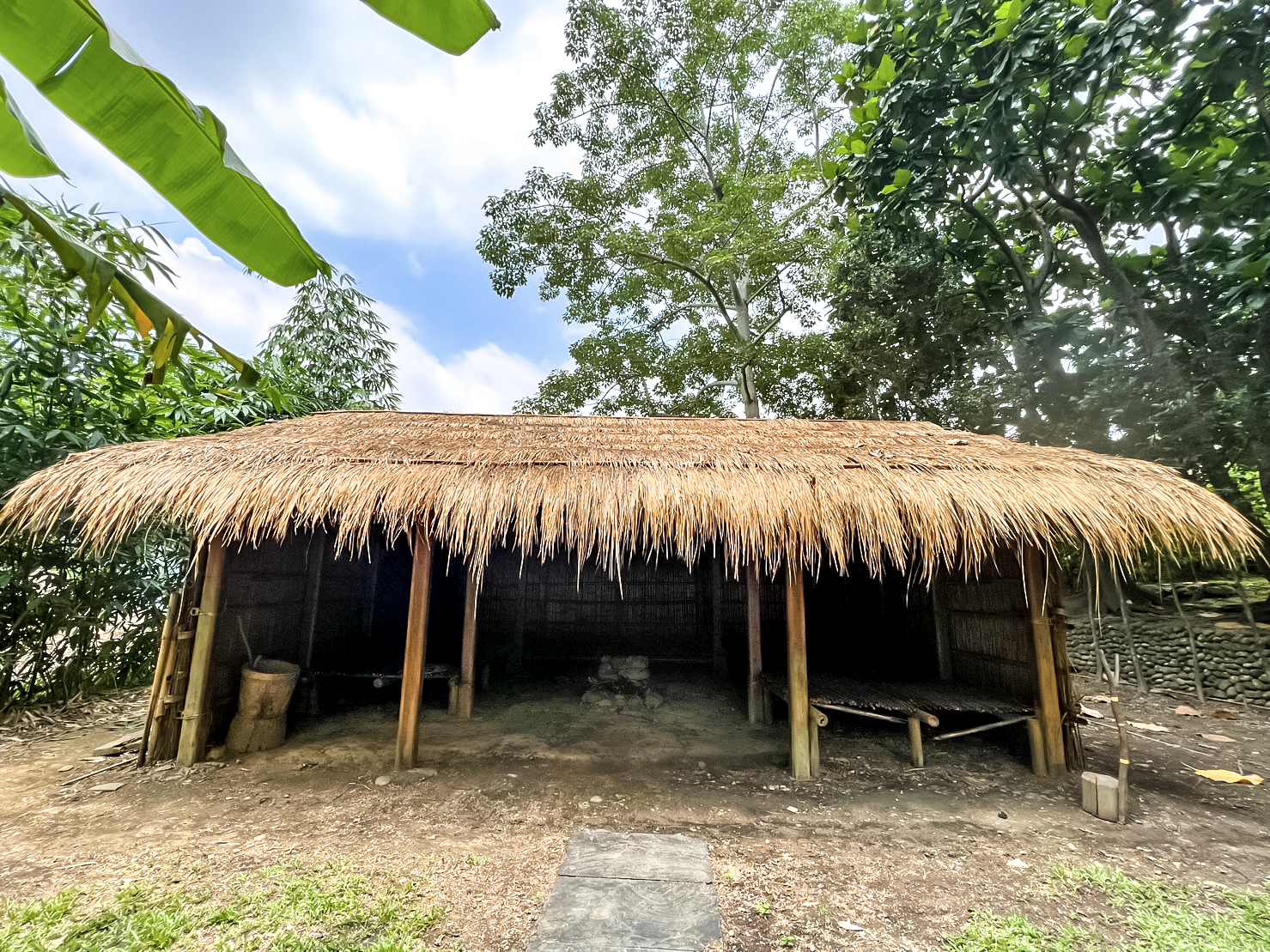
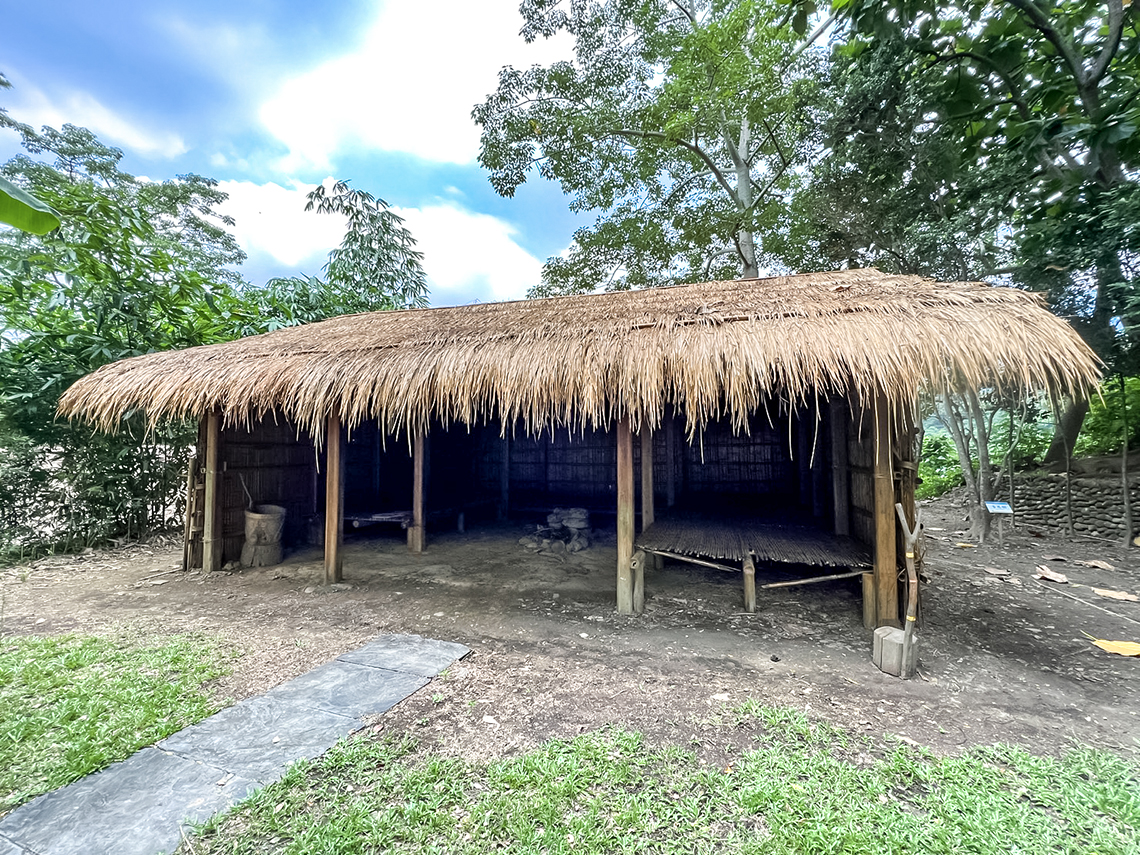
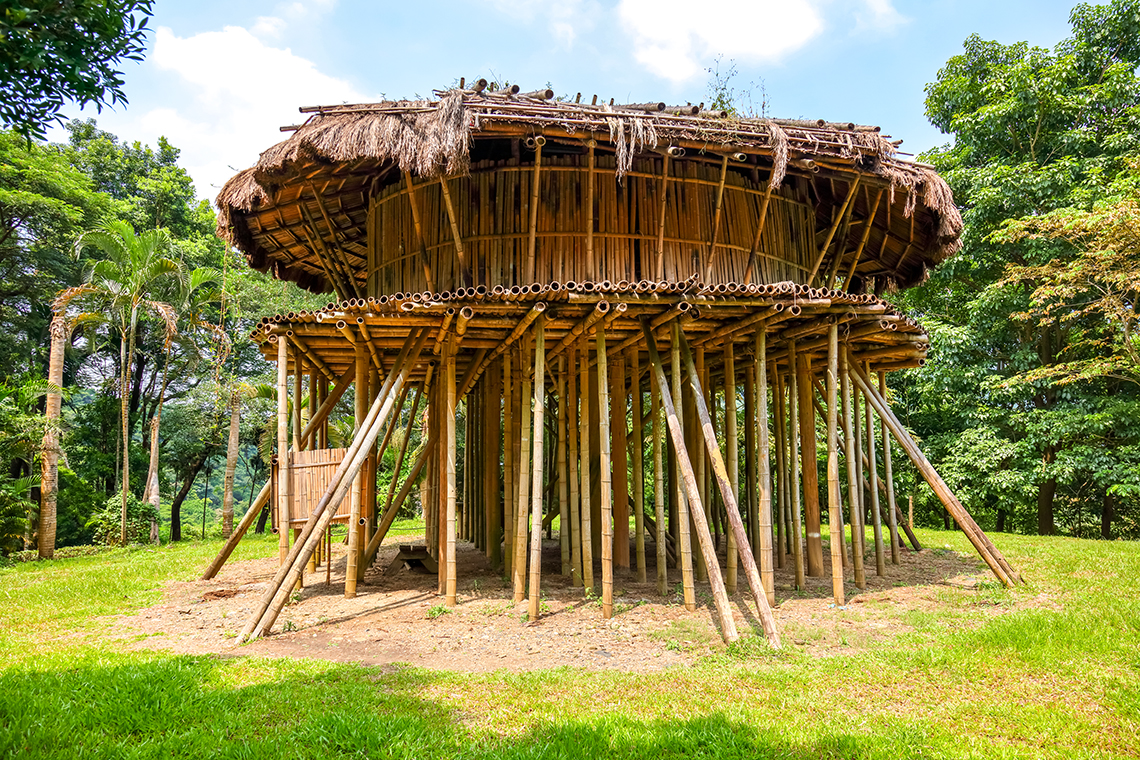
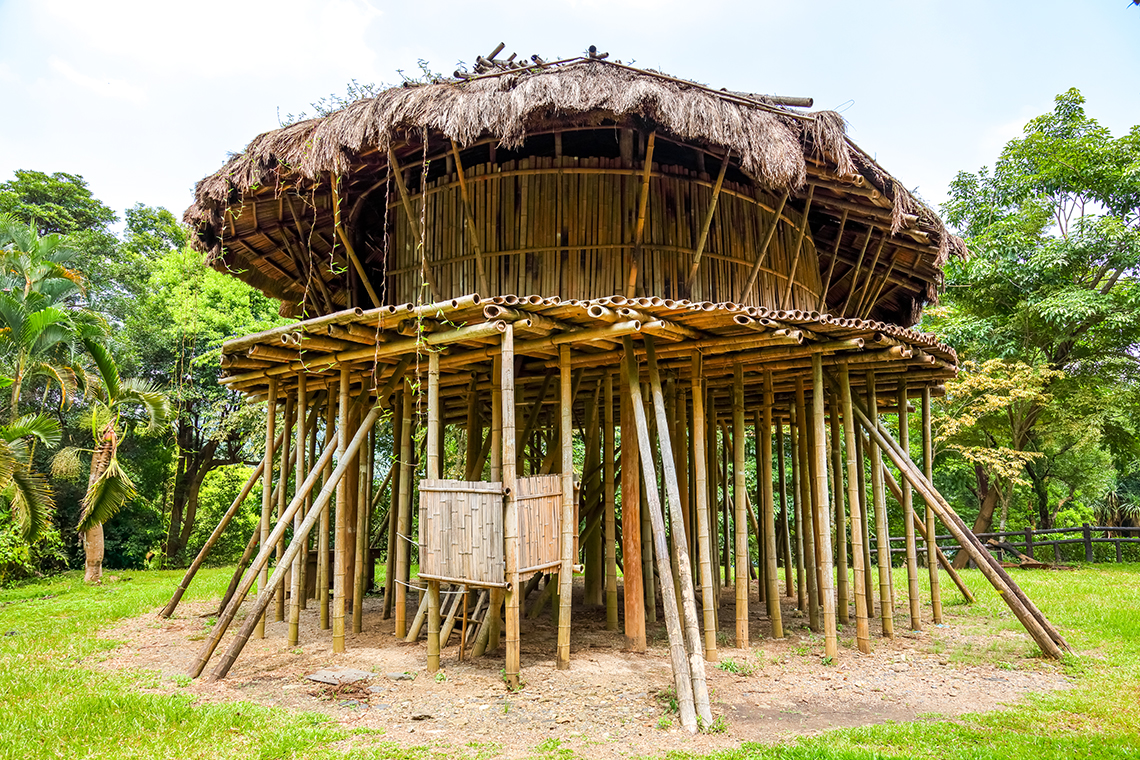
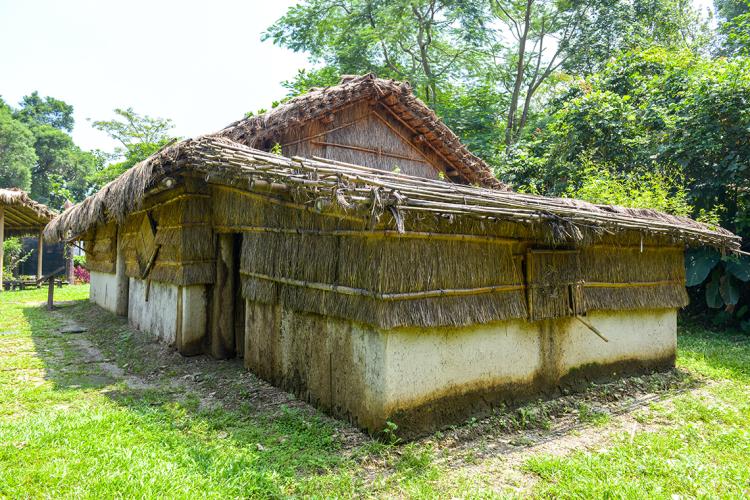
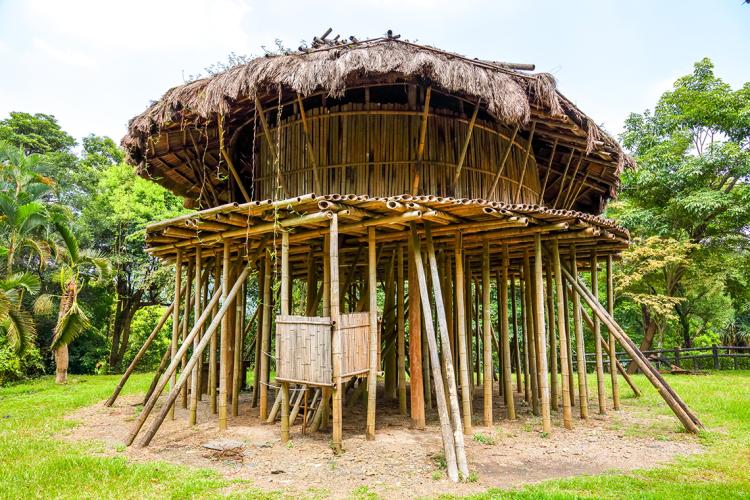
噶瑪蘭族因為漢化極深,傳統建築已消失殆盡,然根據文獻所述,平埔族群中凱達格蘭、雷朗、噶瑪蘭三族的家屋在清初尚保存有南島語族文化的主要特質,例如「干欄」:架在樁上的屋舍,即為其一。根據《噶瑪蘭廳志》記載,當時噶瑪蘭人的家屋是將大木頭挖空倒覆為頂,上下貼茅,用竹木加以支撐,清中葉後其家屋多改以茅草為頂,與土磚牆茅草頂的漢式屋舍相似。
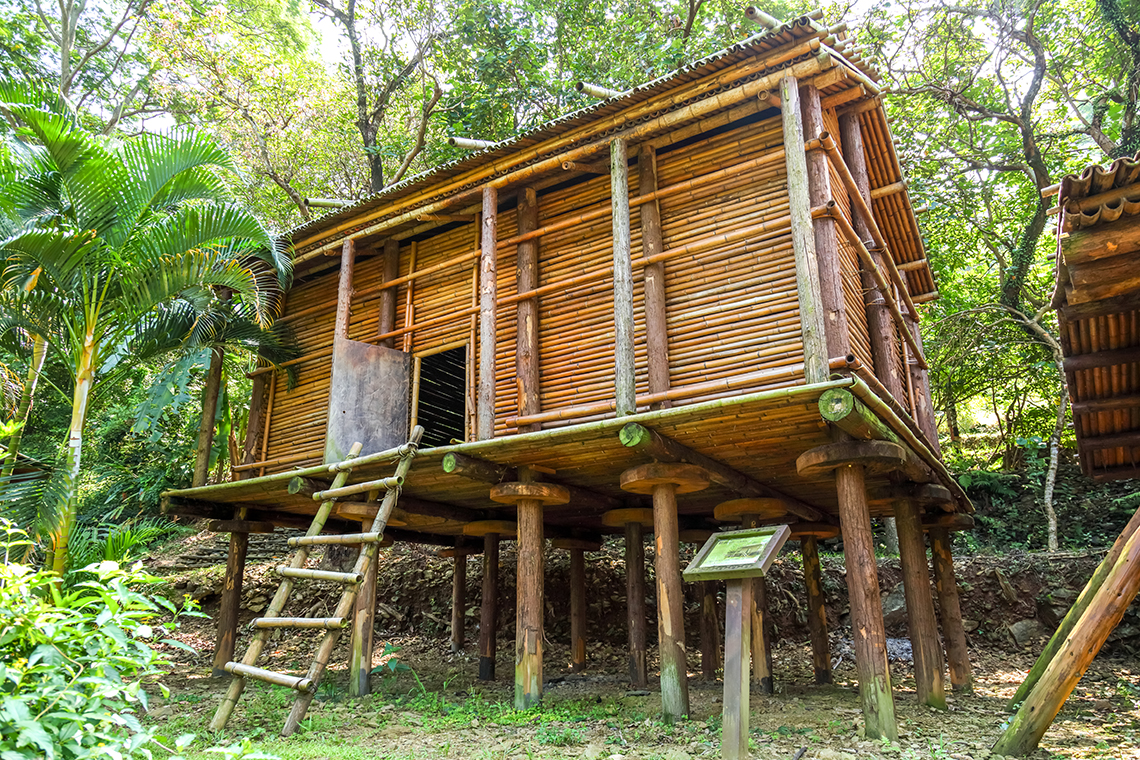
15卑南族傳統建築 Traditional Pinuyumayan Architecture
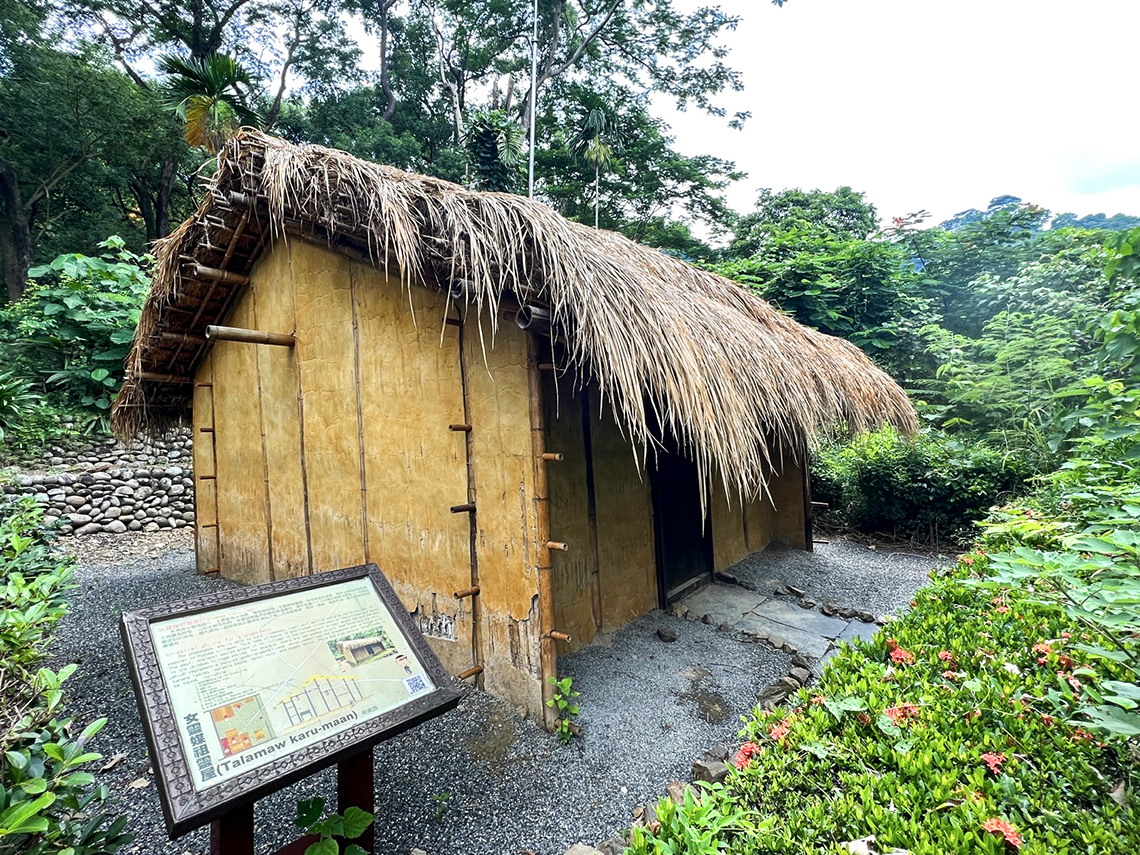
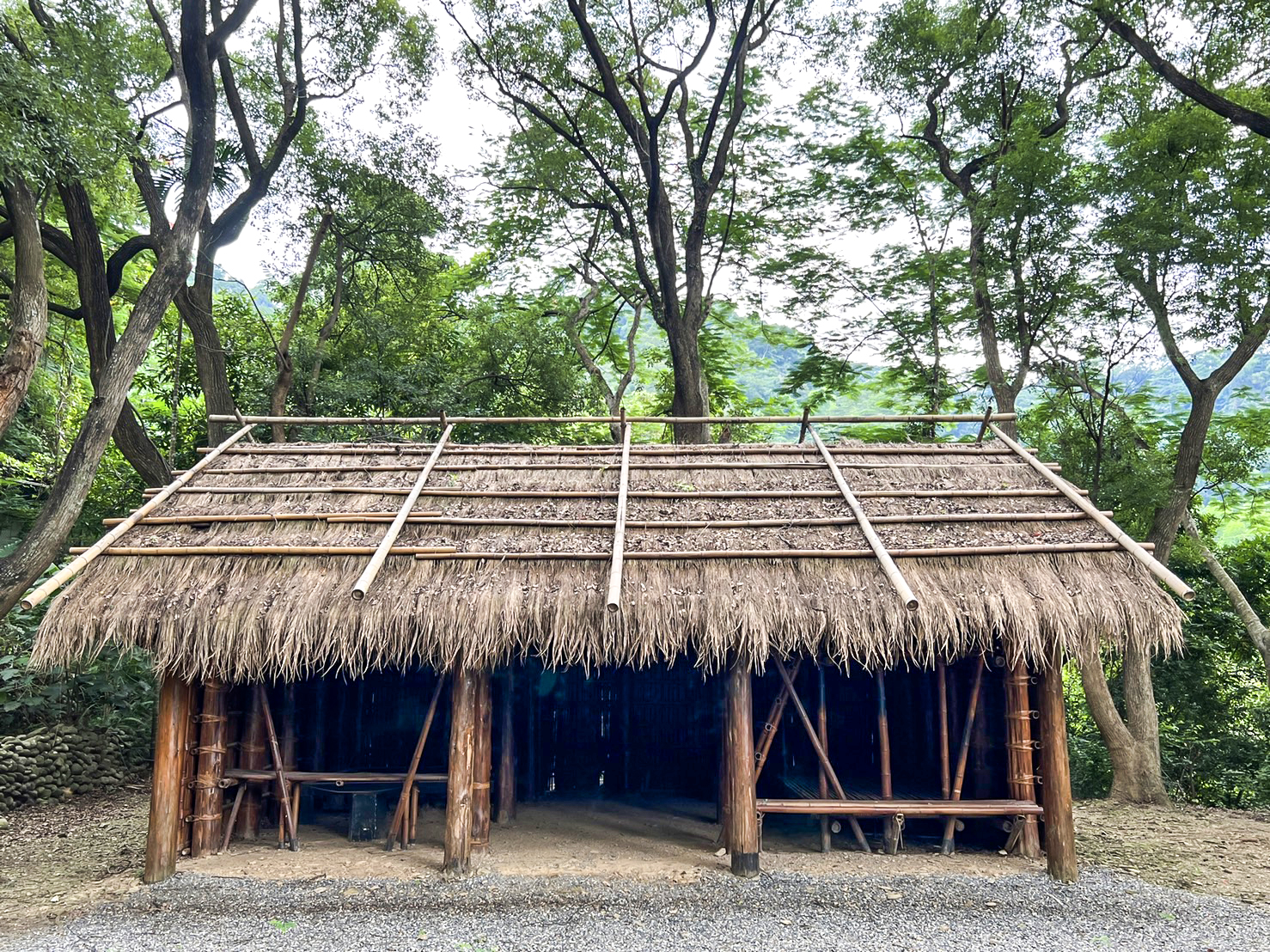
卑南族主要分佈在臺東平原、平原西側淺山山麓與花東縱谷南端的沖積平原,毗鄰阿美族、布農族、排灣族。卑南族傳統住屋分為公用及私,前者包括會所、宗家祖靈屋、瞭望台等;後者則為一般家屋、穀倉、女靈媒屋。
為保護部落安全,卑南族發展出「會所制度」,會所建築也為一大特色。 卑南族男子十二歲時進入少年會所 (takuvan),接受生活禮儀、神話傳說、族群歷史、手工藝及狩獵戰技的訓練,該訓練分為六個階段,由學長遂層管理下一級的孩于。
少年會所「畢業」後,即進入青年會所 (palakuan),接受為期三年的「苦刑期」訓練,不管任何季節都是赤裸上身,只圍一條短裙,必須擔負各項粗重的工作,三年苦訓後才能戴花冠、結交異性朋友,成為真正的卑南青年,然卑南八社的青年會所制度已經消失。