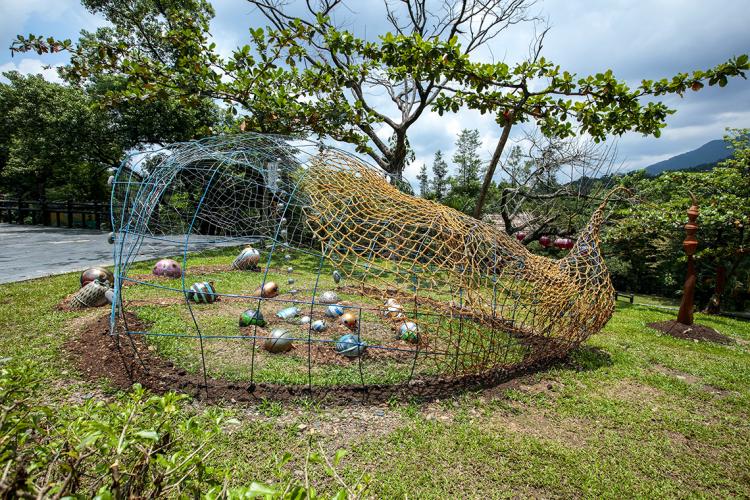
14等待漲潮-永恆與希望 Awaiting High Tide - Eternity and Hope
藝術家: 陳昭興 /阿美族
Artist: Apo’ /Amis
2018
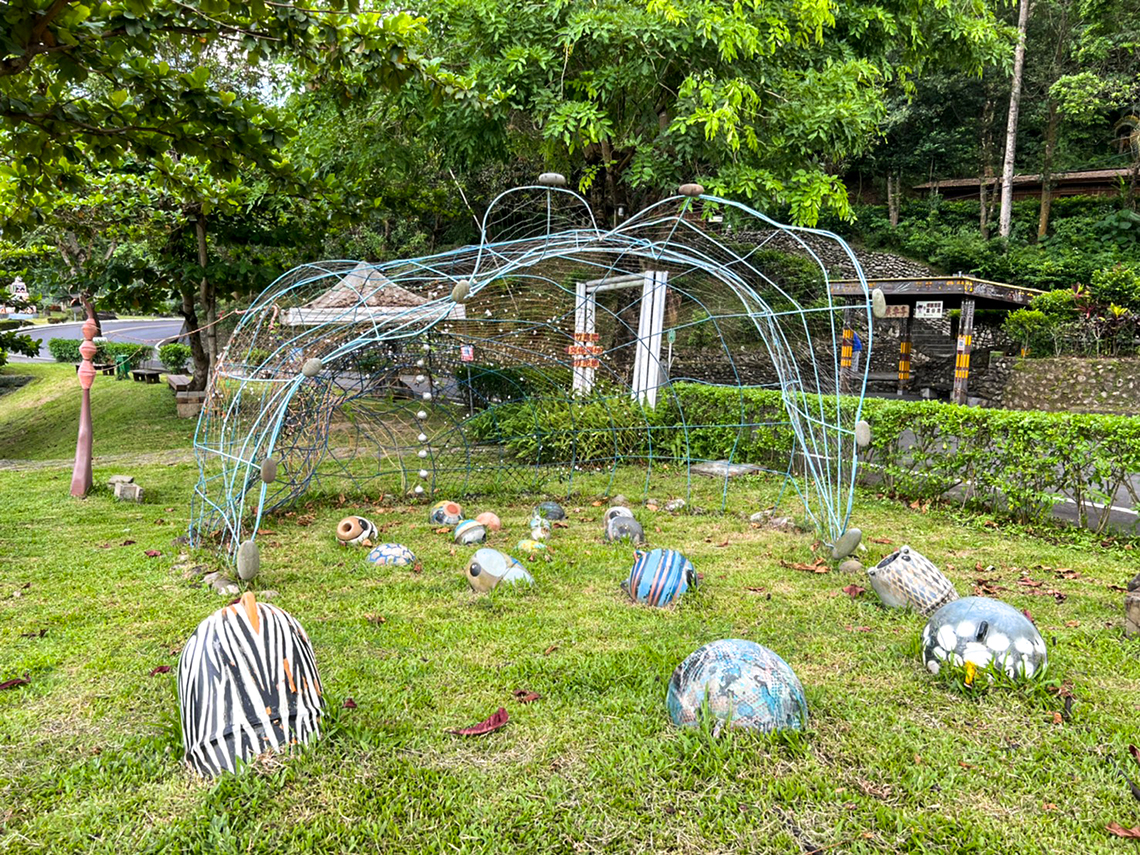
「等待漲潮」是族人展現時間觀的純粹意志。
原住民族順應著自然,日月的起落、隨著洋流季風的魚群、作物生長收穫等,沒有分秒時針的概念,只有自然中當下要做的事。
捕魚前,耆老會提早兩小時等待漲潮到來的魚群,這般匪夷所思、沒效率的步調,卻有某種禪意,時間顯得沒有價值,如同望著大海,感覺不到時間流逝,透過無盡的等待與勞動,進而超越時間,即是永恆!終會盼到希望降臨。
作品兩個主軸:
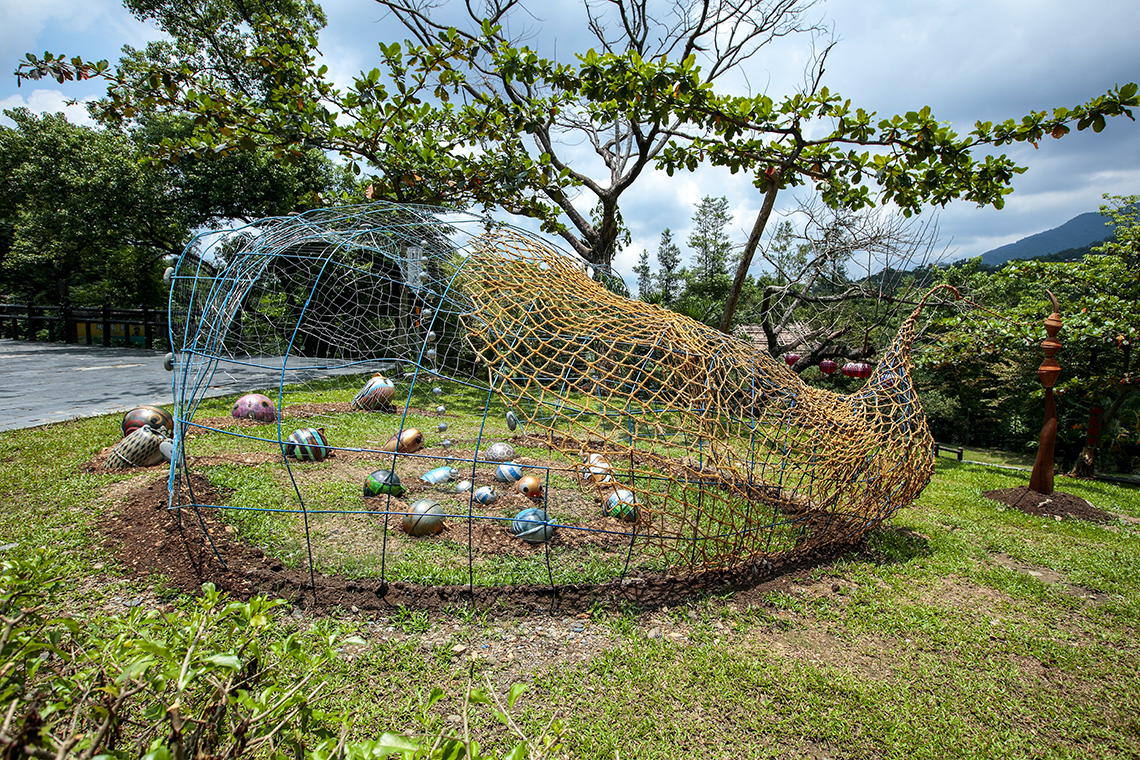
一、耆老海祭時祈求豐收禱唸:海神啊,讓年青人漁網掛的魚,像傳統服的鈴鐺那樣多。魚群鈴鐺以海漂浮球呈現,工業定置型漁網的濫捕,以往等待漲潮的魚群,已被海面的浮球取代。
二、捕魚撒出的八卦網,透過捻線編網的古老工藝,從一條線編到一張網的繁複,展現時間的超越。古早麻線編織大網目漁網,到現代機械鋼線的細網目,小魚也一網打盡。
"Waiting for the rising tide" is the indigenous peoples’ view of the time.
The indigenous peoples follow the rules of nature, like the rise and fall of the sun and the moon, the swarms of fish following the ocean currents, the growth and harvest of crops, etc. There is no concept of minutes and seconds, only the things that need to be done in nature.
Before fishing, the elders would wait two hours in advance for the fish to arrive with the tide. Although this may seem inefficient, it does create some kind of zen. Looking at the sea, time seems to be worthless as it passes by. The endless waiting and labor goes beyond time. It is an eternity! One day, what we hoped for will eventually come.
Two main axes of works:
1. When praying for a good harvest, the elders say: God of the sea, let the fish in young men’s nets hang as many as the bells on our traditional clothes. The fish here are presented by floating balls in the sea. This shows that due to overfishing by fixed fishing nets, the fish that the elders once have waited for along with the tide have been replaced by floating balls on the sea surface.
2. This fishnet shows the transcendence of time. From the ancient craft of twisting hemp threads into large-mesh fishing nets to the fine mesh made by modern mechanical steel threads, today even the smallest fish get caught.
13最後的信仰 Ultimate Belief
藝術家:巴豪嵐.吉嵐 /排灣族
Artist: Pahawlan Cilan /Paiwan
2015
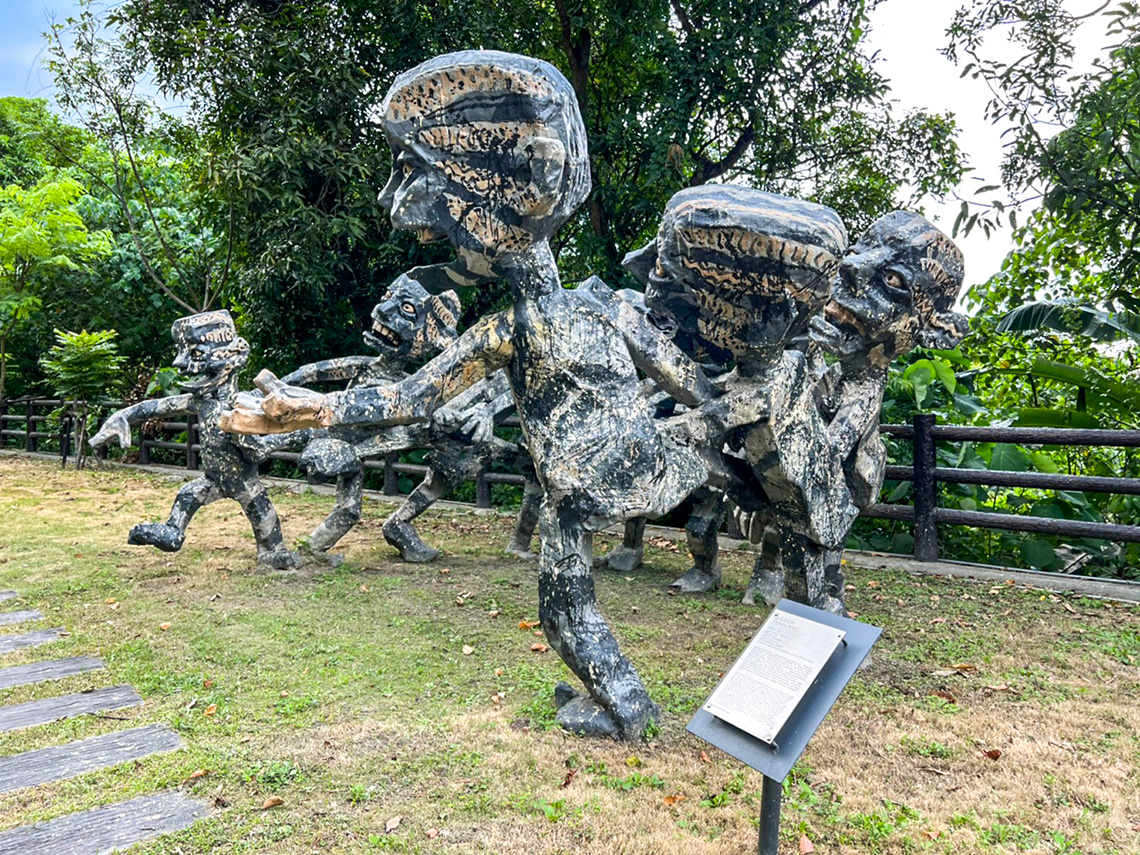
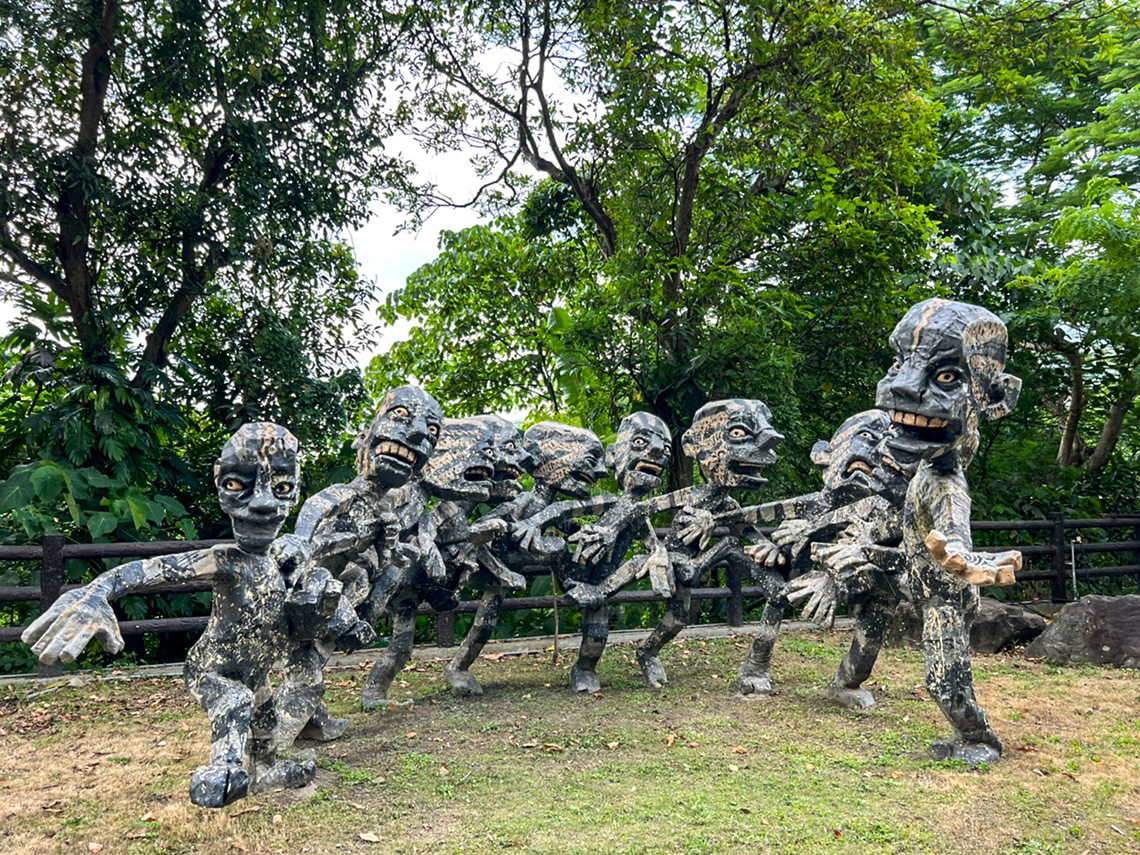
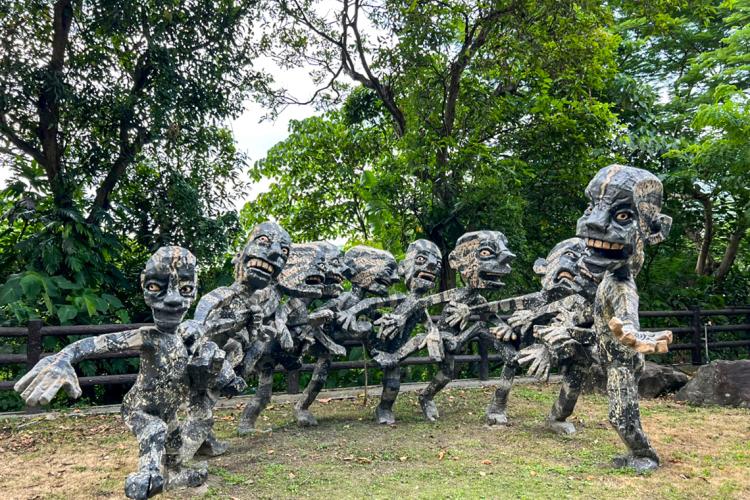
牽起雙手,唱起屬於神靈之歌曲,舞動著身體,儀式可能正在進行或開始進行著,吉嵐將田野裡看見的文化,重新塑造於作品上。
過去對於「泛靈信仰」不了解的他,只能從字面上大概去得知它的意義,但後來在經過花蓮東昌部落時,看見了讓他喚起古老記憶般的祭儀,在這裡找到傳統「泛靈信仰」文化,就這樣停留並花6年的時光,觀察阿美族的傳統信仰文化。阿美族傳統儀式裡,有將近兩百位不同神,雖然不太能夠精準地述說每位神靈的族語名字,卻透過這樣的概念創作作品,他強調每位形象不是為了詮釋標準的祭儀動作,而是為了營造一種文化氛圍。
Holding hands, singing songs belonging to the gods, and moving one’s body to the beat, it is a ceremony that may be in progress or has just begun. In this artwork, Pahawlan Cilan re-created a culture that he has seen in his field study.
In the past, he didn't understand the notion of "animism" until one day he saw a ritual performed in the Dongchang village, Hualien. He has found the animism culture there, and has spent 6 years observing the traditional belief culture of the Amis. There are nearly 200 different gods in the traditional ceremony of the Amis people. Although it is impossible to accurately name each god in the Amis language, he emphasizes that the images in this artwork do not represent the standard ritual itself, but rather to create a cultural atmosphere.
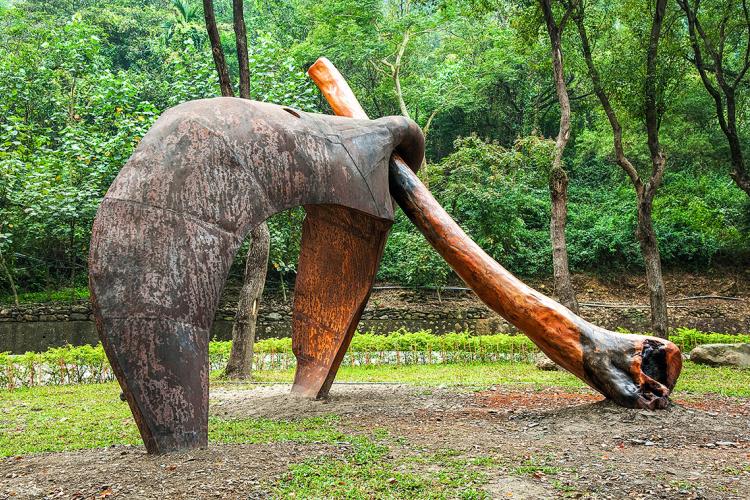
12座落 Settled
藝術家: 達鳳.旮赫地 /阿美族
Artist: Tafong Kati /Amis
2010
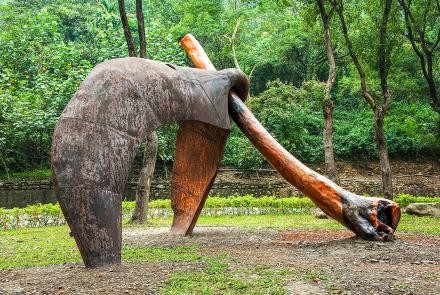
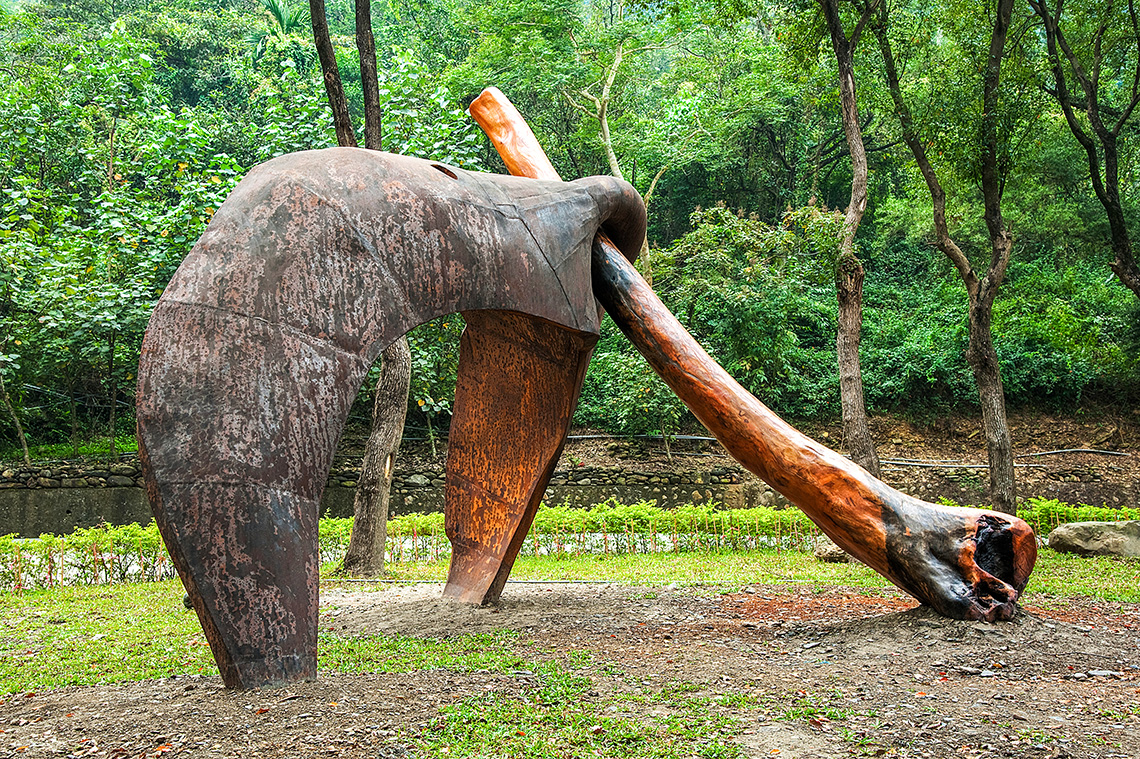
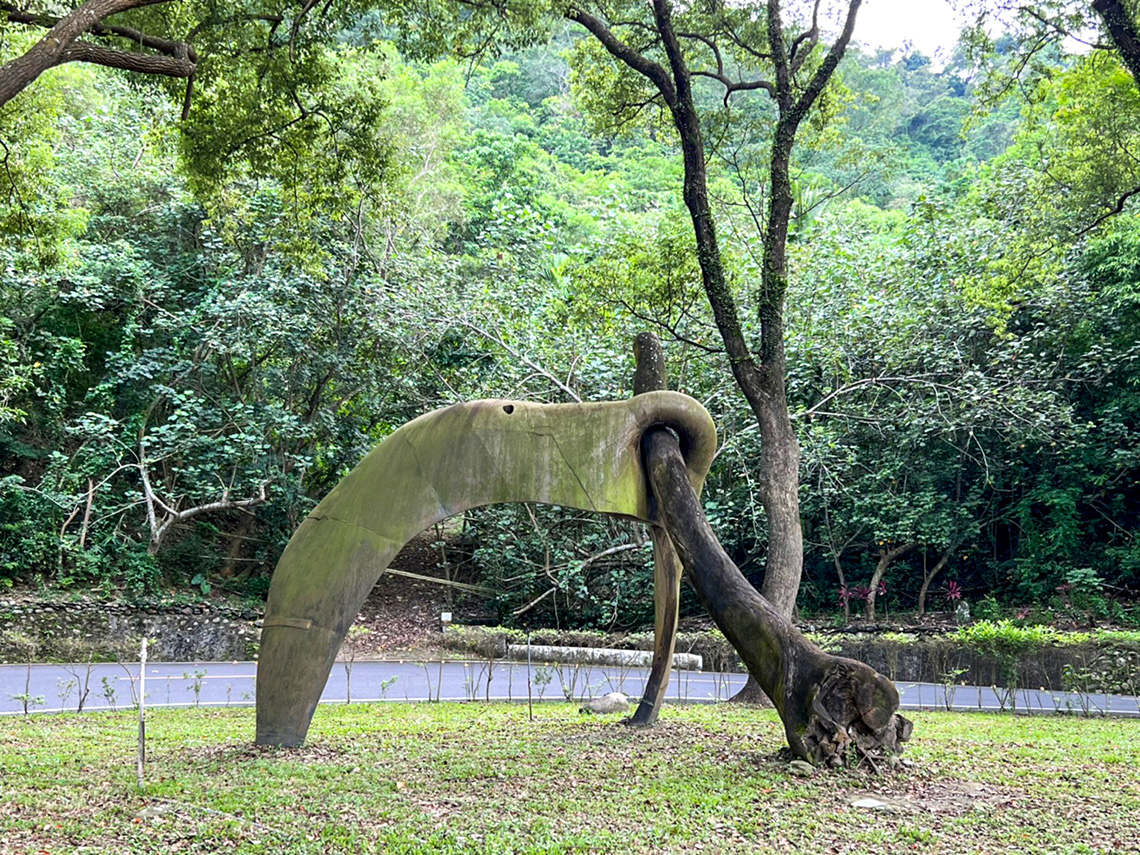
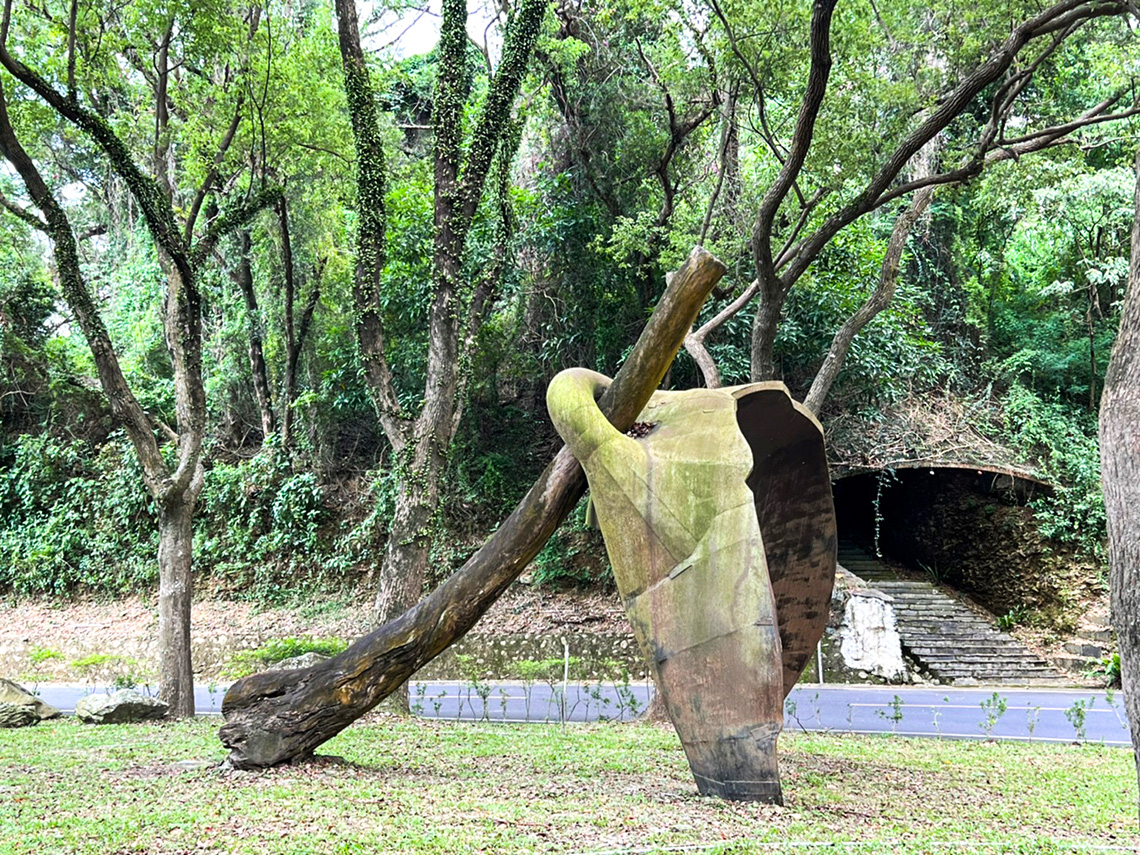
❰座落❱選用鐵和櫸木為創作素材,鐵的形狀代表著阿美陶,「陶」的局部線條象徵著女性,因傳統陶器都是由女性來製作,且有各種不同功能。而櫸木扮演的角色「杵」,象徵著男性,也代表著家中的重要支柱。
透過「陶」與「杵」本身即有特殊的文化意涵,試圖藉著木、鐵雕塑的複合創作,表達人們應從哀傷站起,以傳統文化的根源為基礎,重新再起建造部落,同時保有對家對社會的關懷與期望。
The materials used in this artwork are iron and beech wood. The sculpture made of iron is in the shape of a piece of an Amis clay pot. The pot symbolizes women, because traditional pottery is made by women and has various functions. The role of the beech wood, the "pestle", symbolizes the male and also represents an important pillar of the family.
Through "pottery" and "pestle", which themselves have special cultural connotations, the artist try to use the composite creation of wood and iron sculptures to express that people should stand up from grief and build their tribes anew based on the roots of traditional culture. At the same time, continue giving care to family and having expectations of the society.